Sarah Boone
Patented an improved ironing board
The breakthrough, the technology behind it, the world around it, and the impact that followed.
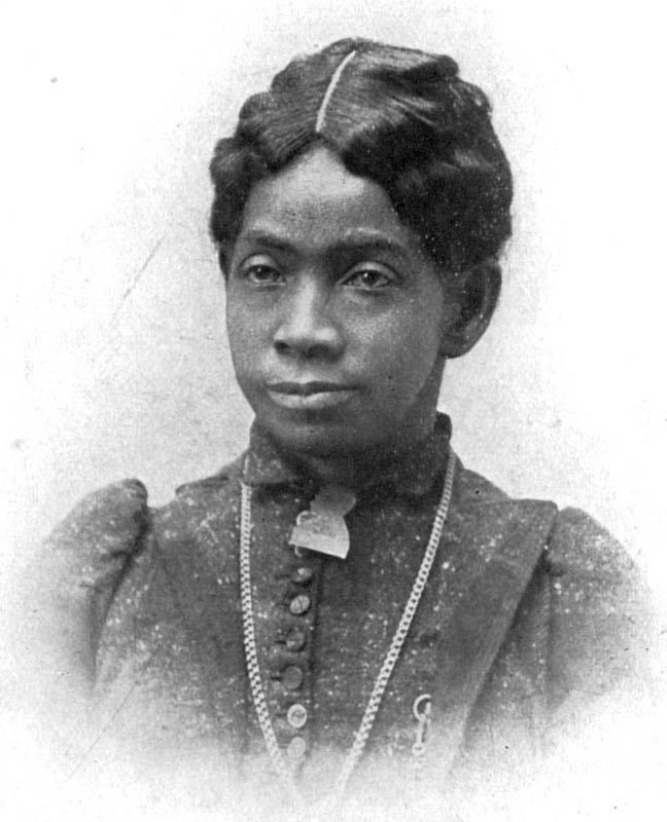
Why Sarah Boone matters
Technology history should not confuse “high technology” with only electronics. Boone changed a tool by understanding form, workflow and the physical needs of the user—the same basic design discipline that still drives successful products today. Dressmaker Sarah Boone patented an improved ironing board in 1892. Its narrow, curved shape was designed to make it easier to press sleeves and the fitted bodies of women’s garments than the broad flat surfaces commonly used for ironing.
The life and career around the milestone
Sarah Boone was born c. 1832. The 1892 milestone belongs to the documented arc of the career rather than standing as an isolated date. The documented death or current-status entry is October 29, 1904; the life span is listed as c. 1832–1904. The clearest documented milestone is patented an improved ironing board. Uncertain biographical details are left unstated rather than guessed.
What problem the work addressed
The invention grew directly from professional expertise. Boone understood clothing construction and the difficulty of finishing garments because she worked with those problems. It is an excellent example of user-centered engineering long before the modern product-design vocabulary existed. Dressmaker Sarah Boone patented an improved ironing board in 1892. Its narrow, curved shape was designed to make it easier to press sleeves and the fitted bodies of women’s garments than the broad flat surfaces commonly used for ironing.
Inside the technology
Boone’s design treated ironing as a geometry problem. Sleeves and fitted garments are three-dimensional forms; a narrow, reversible, padded board could support those shapes more effectively and allow fabric to be pressed without creating unwanted creases. Much of Garment technology + household engineering is invisible to the end user because the important change happens inside a material, formulation, production step, or manufacturing process. The test is repeatability: can the same properties be produced consistently, at useful scale, under real operating conditions? Sarah Boone’s contribution belongs in that process history rather than being reduced to a consumer-product anecdote.
The dated record
The timeline is anchored by 1892. Using the date as an anchor keeps the story testable: readers can separate what was already happening in the field from what followed the documented milestone. No separate company or launch year is stated unless it is supported by the historical evidence. A patent, experiment, or institutional contribution is evidence of technical work; it is not automatically evidence of mass production or commercial success.
From technical work to real-world use
Patent evidence is especially useful in Sarah Boone’s story because it fixes a technical claim to a date and, when drawings survive, shows how the inventor described the mechanism. Boone’s patent became part of the documented record assembled by researchers studying Black patent holders in the nineteenth century. Her work also belongs in a larger history of Black women whose technical contributions were often reduced to novelty facts instead of examined as practical design. A patent still has limits as historical evidence: it does not by itself establish production volume, sales, wealth, or exclusive authorship of every later version of the idea. It documents technical work without implying a broader business claim.
The historical setting
The late nineteenth century was a period of mechanization, railroad growth, urbanization, and expanding patent activity. New devices could solve real industrial problems, yet invention alone did not guarantee capital, manufacturing, distribution, or public credit. Sarah Boone’s milestone belongs inside that wider industrial transition. The technical claim stands on its own without assuming how widely the idea was manufactured or how much money it produced.
What changed because of the work
The invention grew directly from professional expertise. Boone understood clothing construction and the difficulty of finishing garments because she worked with those problems. It is an excellent example of user-centered engineering long before the modern product-design vocabulary existed. Boone’s patent became part of the documented record assembled by researchers studying Black patent holders in the nineteenth century. Her work also belongs in a larger history of Black women whose technical contributions were often reduced to novelty facts instead of examined as practical design. Taken together, those two pieces show why the milestone matters beyond biography. The first explains the constraint or opportunity; the second shows the change in capability, practice, infrastructure, or recognition that followed. That connection is what turns a dated achievement into technology history rather than a list of names.
What the record says—and what it does not
One of the most useful facts in the record is this: The USPTO highlights Boone alongside other inventors on patent examiner Henry Baker’s historic lists of Black patent holders. Her invention was specifically shaped for bodices and sleeves rather than simply being another flat ironing surface. When a celebrated ‘first’ claim is broader than the evidence safely supports, the narrower documented claim is the stronger history.
Why the technology still matters
The artifact may belong to another era, but the engineering pattern is current. Boone’s design treated ironing as a geometry problem. Sleeves and fitted garments are three-dimensional forms; a narrow, reversible, padded board could support those shapes more effectively and allow fabric to be pressed without creating unwanted creases. Modern products still win or fail on the same practical questions: does the design reduce friction, risk, time, cost, or error, and can other people use it reliably? Sarah Boone’s exhibit is valuable because it lets readers see those design questions before today’s vocabulary existed.
A lesson for builders now
The strategic lesson is specificity. Saying that Sarah Boone was ‘innovative’ teaches almost nothing. Saying patented an improved ironing board identifies an action, a problem, and a technical direction. That is the useful level of detail for builders: understand exactly what changed, why the previous approach was inadequate, and what had to be true for the new approach to work.
The legacy in one clear line
The strongest way to remember Sarah Boone is specific: Patented an improved ironing board. Technology history should not confuse “high technology” with only electronics. Boone changed a tool by understanding form, workflow and the physical needs of the user—the same basic design discipline that still drives successful products today. The strongest legacy is the specific, documented contribution itself.