Anna M. Mangin
Patented a pastry fork for mixing and handling dough
The breakthrough, the technology behind it, the world around it, and the impact that followed.
Why Anna M. Mangin matters
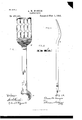
The uncertainty around her life dates remains explicit, while the invention itself is fully documentable. Mangin patented a pastry fork designed to mix ingredients and manipulate dough without requiring the cook to handle it directly. The patent offers a clear, surviving example of a Black woman receiving federal recognition for a practical mechanical invention in the nineteenth century.
The life and career around the milestone
Anna M. Mangin was born Birth year records vary. The 1892 milestone belongs to the documented arc of the career rather than standing as an isolated date. The life span is listed as Not fully verified. The clearest documented milestone is patented a pastry fork for mixing and handling dough. Uncertain biographical details are left unstated rather than guessed.
What problem the work addressed
Mangin’s patent is especially important because Black women are underrepresented in the surviving nineteenth-century patent record and in later retellings of that record. Mangin patented a pastry fork designed to mix ingredients and manipulate dough without requiring the cook to handle it directly. The patent offers a clear, surviving example of a Black woman receiving federal recognition for a practical mechanical invention in the nineteenth century.
Inside the technology
The tool changes how force is applied to mixing and dough handling. Simple hand tools can be genuine engineering objects when geometry, leverage and sanitation change how work is performed. Agricultural and food technology is unforgiving of fragile ideas. Irregular materials, moisture, dirt, continuous use, and the need to save labor expose weak mechanisms quickly. Seen that way, Anna M. Mangin’s work in Food service tools + mechanical design is about process control: turning a repeated physical task into something faster, more consistent, safer, or easier to operate.
The dated record
The timeline is anchored by March 1, 1892 · U.S. Patent No. 470,005. Those dates matter because the contribution developed across more than one documented step rather than appearing as a single frozen moment. No separate company or launch year is stated unless it is supported by the historical evidence. A patent, experiment, or institutional contribution is evidence of technical work; it is not automatically evidence of mass production or commercial success.
From technical work to real-world use
Patent evidence is especially useful in Anna M. Mangin’s story because it fixes a technical claim to a date and, when drawings survive, shows how the inventor described the mechanism. Her invention adds women’s domestic and commercial labor to technology history instead of treating household work as outside the history of design. A patent still has limits as historical evidence: it does not by itself establish production volume, sales, wealth, or exclusive authorship of every later version of the idea. It documents technical work without implying a broader business claim.
The historical setting
The late nineteenth century was a period of mechanization, railroad growth, urbanization, and expanding patent activity. New devices could solve real industrial problems, yet invention alone did not guarantee capital, manufacturing, distribution, or public credit. Anna M. Mangin’s milestone belongs inside that wider industrial transition. The technical claim stands on its own without assuming how widely the idea was manufactured or how much money it produced.
What changed because of the work
Mangin’s patent is especially important because Black women are underrepresented in the surviving nineteenth-century patent record and in later retellings of that record. Her invention adds women’s domestic and commercial labor to technology history instead of treating household work as outside the history of design. Taken together, those two pieces show why the milestone matters beyond biography. The first explains the constraint or opportunity; the second shows the change in capability, practice, infrastructure, or recognition that followed. That connection is what turns a dated achievement into technology history rather than a list of names.
What the record says—and what it does not
One of the most useful facts in the record is this: The patent survives under U.S. Patent No. 470,005, issued in 1892. Mangin pastry fork. Mangin. When a celebrated ‘first’ claim is broader than the evidence safely supports, the narrower documented claim is the stronger history.
Why the technology still matters
The artifact may belong to another era, but the engineering pattern is current. The tool changes how force is applied to mixing and dough handling. Simple hand tools can be genuine engineering objects when geometry, leverage and sanitation change how work is performed. Modern products still win or fail on the same practical questions: does the design reduce friction, risk, time, cost, or error, and can other people use it reliably? Anna M. Mangin’s exhibit is valuable because it lets readers see those design questions before today’s vocabulary existed.
A lesson for builders now
For builders, the most transferable lesson is to study the constraint before admiring the artifact. Anna M. Mangin’s documented milestone was to patented a pastry fork for mixing and handling dough. Mangin’s patent is especially important because Black women are underrepresented in the surviving nineteenth-century patent record and in later retellings of that record. A strong product strategy starts the same way: identify the failure, bottleneck, or exclusion clearly enough that the design decision becomes obvious in hindsight.
The legacy in one clear line
The strongest way to remember Anna M. Mangin is specific: Patented a pastry fork for mixing and handling dough. The uncertainty around her life dates remains explicit, while the invention itself is fully documentable. The strongest legacy is the specific, documented contribution itself.