Madeline M. Turner
Patented a mechanical fruit press
The breakthrough, the technology behind it, the world around it, and the impact that followed.
Why Madeline M. Turner matters
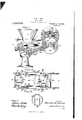
The important idea is not merely squeezing fruit; it is arranging actions into a repeatable flow so a task becomes less dependent on repeated hand labor. Madeline M. Turner received U.S. Patent No. 1,180,959 in 1916 for a fruit press designed to cut fruit and move it through pressing surfaces so juice could be extracted efficiently. The machine organized several manual steps into a coordinated mechanical sequence.
The life and career around the milestone
A precise birth date for Madeline M. Turner is not firmly established in the available historical record. The 1916 milestone belongs to the documented arc of the career rather than standing as an isolated date. The life span is listed as Life dates not publicly verified. The clearest documented milestone is patented a mechanical fruit press. Uncertain biographical details are left unstated rather than guessed.
What problem the work addressed
Turning repeated kitchen or commercial labor into a sequence handled by machinery improves throughput and consistency. Turner’s design is important because it shows a Black woman inventor working on process automation and food technology in the early twentieth century. Madeline M. Turner received U.S. Patent No. 1,180,959 in 1916 for a fruit press designed to cut fruit and move it through pressing surfaces so juice could be extracted efficiently. The machine organized several manual steps into a coordinated mechanical sequence.
Inside the technology
The press used feed openings, cutting components, gearing and opposed plates to move fruit through a repeatable extraction process. In modern process-engineering terms, it created a small production line: input, preparation, compression and collection. Much of Food-processing machinery is invisible to the end user because the important change happens inside a material, formulation, production step, or manufacturing process. The test is repeatability: can the same properties be produced consistently, at useful scale, under real operating conditions? Madeline M. Turner’s contribution belongs in that process history rather than being reduced to a consumer-product anecdote.
The dated record
The timeline is anchored by 1916. Using the date as an anchor keeps the story testable: readers can separate what was already happening in the field from what followed the documented milestone. No separate company or launch year is stated unless it is supported by the historical evidence. A patent, experiment, or institutional contribution is evidence of technical work; it is not automatically evidence of mass production or commercial success.
From technical work to real-world use
Patent evidence is especially useful in Madeline M. Turner’s story because it fixes a technical claim to a date and, when drawings survive, shows how the inventor described the mechanism. Contemporary reports highlighted the design and it was exhibited in California. Its patent preserves a clear record of Turner engineering around the mechanics of juice extraction at a time when Black women’s technical work was rarely centered in mainstream invention narratives. A patent still has limits as historical evidence: it does not by itself establish production volume, sales, wealth, or exclusive authorship of every later version of the idea. It documents technical work without implying a broader business claim.
The historical setting
By the early twentieth century, automobiles, utilities, factories, mass production, and professional engineering were remaking daily life. Jim Crow segregation and discriminatory hiring shaped the American economy at the same time. Madeline M.
What changed because of the work
Turning repeated kitchen or commercial labor into a sequence handled by machinery improves throughput and consistency. Turner’s design is important because it shows a Black woman inventor working on process automation and food technology in the early twentieth century. Contemporary reports highlighted the design and it was exhibited in California. Its patent preserves a clear record of Turner engineering around the mechanics of juice extraction at a time when Black women’s technical work was rarely centered in mainstream invention narratives. Taken together, those two pieces show why the milestone matters beyond biography. The first explains the constraint or opportunity; the second shows the change in capability, practice, infrastructure, or recognition that followed. That connection is what turns a dated achievement into technology history rather than a list of names.
What the record says—and what it does not
One of the most useful facts in the record is this: Turner’s patent was granted on April 25, 1916. The design has sometimes been simplified online as “inventing the juicer”; the precise claim is her patented fruit-press mechanism, not ownership of every form of juice extraction before or after it. S. Patent 1,180,959 — Madeline M. Turner fruit press and BlackPast — Madeline M. Turner. Turner. When a celebrated ‘first’ claim is broader than the evidence safely supports, the narrower documented claim is the stronger history.
Why the technology still matters
The artifact may belong to another era, but the engineering pattern is current. The press used feed openings, cutting components, gearing and opposed plates to move fruit through a repeatable extraction process. In modern process-engineering terms, it created a small production line: input, preparation, compression and collection. Modern products still win or fail on the same practical questions: does the design reduce friction, risk, time, cost, or error, and can other people use it reliably? Madeline M. Turner’s exhibit is valuable because it lets readers see those design questions before today’s vocabulary existed.
A lesson for builders now
For builders, the most transferable lesson is to study the constraint before admiring the artifact. Madeline M. Turner’s documented milestone was to patented a mechanical fruit press. Turning repeated kitchen or commercial labor into a sequence handled by machinery improves throughput and consistency. Turner’s design is important because it shows a Black woman inventor working on process automation and food technology in the early twentieth century. A strong product strategy starts the same way: identify the failure, bottleneck, or exclusion clearly enough that the design decision becomes obvious in hindsight.
The legacy in one clear line
The strongest way to remember Madeline M. Turner is specific: Patented a mechanical fruit press. The important idea is not merely squeezing fruit; it is arranging actions into a repeatable flow so a task becomes less dependent on repeated hand labor. The strongest legacy is the specific, documented contribution itself.