Alice H. Parker
Patented a natural-gas heating furnace with room-directed ducts
The breakthrough, the technology behind it, the world around it, and the impact that followed.
Why Alice H. Parker matters
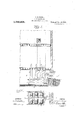
Accuracy is more respectful than filling archival gaps with a story that merely sounds complete. Alice H. Parker received U.S. Patent No. 1,325,905 on December 23, 1919 for a heating furnace using gas and a system of ducts and individually regulated heating units. The design proposed moving heat to different rooms rather than relying only on a single fireplace or stove.
The life and career around the milestone
Alice H. Parker was born 1895. The 1919 milestone belongs to the documented arc of the career rather than standing as an isolated date. The life span is listed as 1895–date of death not publicly verified. The clearest documented milestone is patented a natural-gas heating furnace with room-directed ducts. Uncertain biographical details are left unstated rather than guessed.
What problem the work addressed
Heating is infrastructure inside the home. A safer, more controllable way to distribute warmth affects comfort, fuel use and how buildings can be designed. Parker was addressing a systems problem—how to move thermal energy through a multi-room structure—not merely inventing a standalone heater. Alice H. Parker received U.S. Patent No. 1,325,905 on December 23, 1919 for a heating furnace using gas and a system of ducts and individually regulated heating units. The design proposed moving heat to different rooms rather than relying only on a single fireplace or stove.
Inside the technology
Parker’s patent organized burners, air flow, ducts and regulating valves into a building-heating system. The concept anticipated important features of zoned and distributed heating: create heat centrally, direct warmed air through separate paths and give occupants more control over where heat is delivered. Built-environment technology has to work for years inside systems that ordinary people depend on every day. Efficiency matters, but so do maintenance, safety, installation, and how one component interacts with the rest of a structure. That makes Alice H. Parker’s contribution in Heating + building systems a systems problem rather than a one-off object: the design has to fit a larger environment and remain useful after the inventor leaves the room.
The dated record
The timeline is anchored by 1919. Using the date as an anchor keeps the story testable: readers can separate what was already happening in the field from what followed the documented milestone. No separate company or launch year is stated unless it is supported by the historical evidence. A patent, experiment, or institutional contribution is evidence of technical work; it is not automatically evidence of mass production or commercial success.
From technical work to real-world use
Patent evidence is especially useful in Alice H. Parker’s story because it fixes a technical claim to a date and, when drawings survive, shows how the inventor described the mechanism. Her patent is frequently discussed as an early conceptual step toward modern central-heating approaches, although the exact design was not the same as today’s HVAC systems and should not be described as directly inventing every modern furnace. Its historical value lies in the documented use of gas, ducting and room-level regulation in a 1919 patent by a Black woman inventor. A patent still has limits as historical evidence: it does not by itself establish production volume, sales, wealth, or exclusive authorship of every later version of the idea. It documents technical work without implying a broader business claim.
The historical setting
By the early twentieth century, automobiles, utilities, factories, mass production, and professional engineering were remaking daily life. Jim Crow segregation and discriminatory hiring shaped the American economy at the same time. Alice H.
What changed because of the work
Heating is infrastructure inside the home. A safer, more controllable way to distribute warmth affects comfort, fuel use and how buildings can be designed. Parker was addressing a systems problem—how to move thermal energy through a multi-room structure—not merely inventing a standalone heater. Her patent is frequently discussed as an early conceptual step toward modern central-heating approaches, although the exact design was not the same as today’s HVAC systems and should not be described as directly inventing every modern furnace. Its historical value lies in the documented use of gas, ducting and room-level regulation in a 1919 patent by a Black woman inventor. Taken together, those two pieces show why the milestone matters beyond biography. The first explains the constraint or opportunity; the second shows the change in capability, practice, infrastructure, or recognition that followed. That connection is what turns a dated achievement into technology history rather than a list of names.
What the record says—and what it does not
One of the most useful facts in the record is this: Photographs commonly circulated online as Alice Parker have been misidentified, and much of her biography remains uncertain. Parker, Howard University — Alice H. Parker heating patent and U.S. Patent 1,325,905 — Alice H. Parker heating furnace. Parker. When a celebrated ‘first’ claim is broader than the evidence safely supports, the narrower documented claim is the stronger history.
Why the technology still matters
The modern connection is direct in concept even when the tools have changed. Today’s systems still depend on reliable interfaces, good data, trustworthy automation, and architecture that can scale. Parker’s patent organized burners, air flow, ducts and regulating valves into a building-heating system. The concept anticipated important features of zoned and distributed heating: create heat centrally, direct warmed air through separate paths and give occupants more control over where heat is delivered. The point is not that every modern product descends directly from Alice H. Parker’s work; it is that the same class of engineering problem—how to make information systems dependable and usable—remains central.
A lesson for builders now
The strategic lesson is specificity. Saying that Alice H. Parker was ‘innovative’ teaches almost nothing. Saying patented a natural-gas heating furnace with room-directed ducts identifies an action, a problem, and a technical direction. That is the useful level of detail for builders: understand exactly what changed, why the previous approach was inadequate, and what had to be true for the new approach to work.
The legacy in one clear line
The strongest way to remember Alice H. Parker is specific: Patented a natural-gas heating furnace with room-directed ducts. Accuracy is more respectful than filling archival gaps with a story that merely sounds complete. The strongest legacy is the specific, documented contribution itself.