Joseph Lee
Patented machines that automated bread kneading and breadcrumb production
The breakthrough, the technology behind it, the world around it, and the impact that followed.
Why Joseph Lee matters
His machines converted repeated hand work into controlled mechanical motion and found a second use for material that might otherwise be discarded—a nineteenth-century version of the productivity and waste-reduction problems companies still solve today. Joseph Lee patented a dough-kneading machine in 1894 and a breadcrumb-making machine in 1895. A successful hotelier, restaurateur and caterer, he designed machinery around production problems he understood from operating commercial kitchens: consistent bread, heavy manual labor and waste from day-old loaves.
The life and career around the milestone
Joseph Lee was born 1848/1849 · records differ. The 1894 milestone belongs to the documented arc of the career rather than standing as an isolated date. The documented death or current-status entry is June 11, 1908; the life span is listed as c. 1848–1908. The clearest documented milestone is patented machines that automated bread kneading and breadcrumb production. Uncertain biographical details are left unstated rather than guessed.
What problem the work addressed
Lee’s inventions connect automation with operations. He was not automating an abstract laboratory task; he was reducing labor and waste inside businesses that had to feed many people consistently. That is exactly how modern process engineering creates value: improve throughput, consistency and resource use at the same time. Joseph Lee patented a dough-kneading machine in 1894 and a breadcrumb-making machine in 1895. A successful hotelier, restaurateur and caterer, he designed machinery around production problems he understood from operating commercial kitchens: consistent bread, heavy manual labor and waste from day-old loaves.
Inside the technology
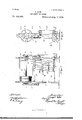
His kneading machine used oppositely rotating conveyors to move dough back toward reciprocating kneading elements, automating a repetitive physical process while aiming for uniform texture. His breadcrumb machine mechanically tore, crumbled and ground older bread so it could become an ingredient instead of waste. Much of Food-production automation is invisible to the end user because the important change happens inside a material, formulation, production step, or manufacturing process. The test is repeatability: can the same properties be produced consistently, at useful scale, under real operating conditions? Joseph Lee’s contribution belongs in that process history rather than being reduced to a consumer-product anecdote.
The dated record
The timeline is anchored by 1894. Using the date as an anchor keeps the story testable: readers can separate what was already happening in the field from what followed the documented milestone. No separate company or launch year is stated unless it is supported by the historical evidence. A patent, experiment, or institutional contribution is evidence of technical work; it is not automatically evidence of mass production or commercial success.
From technical work to real-world use
Patent evidence is especially useful in Joseph Lee’s story because it fixes a technical claim to a date and, when drawings survive, shows how the inventor described the mechanism. The National Inventors Hall of Fame recognizes Lee as a pioneer in bread and breadcrumb automation and inducted him in 2019. His machines were adopted in hospitality and food-service settings and demonstrate that commercial kitchens were important sites of industrial innovation. A patent still has limits as historical evidence: it does not by itself establish production volume, sales, wealth, or exclusive authorship of every later version of the idea. It documents technical work without implying a broader business claim.
The historical setting
The late nineteenth century was a period of mechanization, railroad growth, urbanization, and expanding patent activity. New devices could solve real industrial problems, yet invention alone did not guarantee capital, manufacturing, distribution, or public credit. Joseph Lee’s milestone belongs inside that wider industrial transition. The technical claim stands on its own without assuming how widely the idea was manufactured or how much money it produced.
What changed because of the work
Lee’s inventions connect automation with operations. He was not automating an abstract laboratory task; he was reducing labor and waste inside businesses that had to feed many people consistently. That is exactly how modern process engineering creates value: improve throughput, consistency and resource use at the same time. The National Inventors Hall of Fame recognizes Lee as a pioneer in bread and breadcrumb automation and inducted him in 2019. His machines were adopted in hospitality and food-service settings and demonstrate that commercial kitchens were important sites of industrial innovation. Taken together, those two pieces show why the milestone matters beyond biography. The first explains the constraint or opportunity; the second shows the change in capability, practice, infrastructure, or recognition that followed. That connection is what turns a dated achievement into technology history rather than a list of names.
What the record says—and what it does not
One of the most useful facts in the record is this: Lee was born enslaved in South Carolina and later became a successful Massachusetts entrepreneur before receiving his patents. His path from labor inside kitchens to ownership and patented automation makes his story a clear link between operational experience and invention. S. Patent 524,042 — Joseph Lee kneading machine. When a celebrated ‘first’ claim is broader than the evidence safely supports, the narrower documented claim is the stronger history.
Why the technology still matters
The modern connection is direct in concept even when the tools have changed. Today’s systems still depend on reliable interfaces, good data, trustworthy automation, and architecture that can scale. His kneading machine used oppositely rotating conveyors to move dough back toward reciprocating kneading elements, automating a repetitive physical process while aiming for uniform texture. His breadcrumb machine mechanically tore, crumbled and ground older bread so it could become an ingredient instead of waste. The point is not that every modern product descends directly from Joseph Lee’s work; it is that the same class of engineering problem—how to make information systems dependable and usable—remains central.
A lesson for builders now
A founder looking at Joseph Lee should separate invention from adoption. The milestone—Patented machines that automated bread kneading and breadcrumb production—created technical possibility. The impact section shows what happened when that possibility entered use. Modern builders still have to bridge the same gap with manufacturing, distribution, standards, integrations, trust, or customer education.
The legacy in one clear line
The strongest way to remember Joseph Lee is specific: Patented machines that automated bread kneading and breadcrumb production. His machines converted repeated hand work into controlled mechanical motion and found a second use for material that might otherwise be discarded—a nineteenth-century version of the productivity and waste-reduction problems companies still solve today. The strongest legacy is the specific, documented contribution itself.