Alfred L. Cralle
Patented a one-handed ice-cream mold and disher
The breakthrough, the technology behind it, the world around it, and the impact that followed.
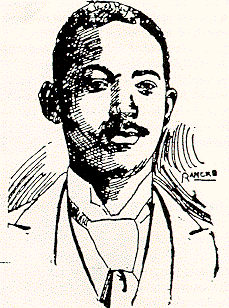
Why Alfred L. Cralle matters
Cralle’s exhibit makes an important historical point: technology can be ordinary and still be ingenious. The history of invention is not only about grand machines; it is also about making a repeated human action faster, cleaner and easier. Alfred L. Cralle received U.S. Patent No. 576,395 in 1897 for an ice-cream mold and disher. His design integrated a scraping mechanism so a server could form and release a portion with one hand, addressing the tendency of ice cream to stick to ordinary serving tools.
The life and career around the milestone
Alfred L. Cralle was born September 4, 1866. The 1897 milestone belongs to the documented arc of the career rather than standing as an isolated date. The documented death or current-status entry is May 6, 1919; the life span is listed as 1866–1919. The clearest documented milestone is patented a one-handed ice-cream mold and disher. Uncertain biographical details are left unstated rather than guessed.
What problem the work addressed
Food-service technology lives or dies by repetition. A small improvement multiplied across hundreds of servings can save time, reduce mess and make portioning more consistent. Cralle designed for the workflow, not merely the object. Alfred L. Cralle received U.S. Patent No. 576,395 in 1897 for an ice-cream mold and disher. His design integrated a scraping mechanism so a server could form and release a portion with one hand, addressing the tendency of ice cream to stick to ordinary serving tools.
Inside the technology
Cralle’s device combined a scoop-like form with a mechanically actuated scraper. The user’s hand supplied the force; the mechanism converted that input into a wiping action across the serving surface, releasing the food without requiring a second utensil or hand. Agricultural and food technology is unforgiving of fragile ideas. Irregular materials, moisture, dirt, continuous use, and the need to save labor expose weak mechanisms quickly. Seen that way, Alfred L. Cralle’s work in Food-service product design is about process control: turning a repeated physical task into something faster, more consistent, safer, or easier to operate.
The dated record
The timeline is anchored by 1897. Using the date as an anchor keeps the story testable: readers can separate what was already happening in the field from what followed the documented milestone. No separate company or launch year is stated unless it is supported by the historical evidence. A patent, experiment, or institutional contribution is evidence of technical work; it is not automatically evidence of mass production or commercial success.
From technical work to real-world use
Patent evidence is especially useful in Alfred L. Cralle’s story because it fixes a technical claim to a date and, when drawings survive, shows how the inventor described the mechanism. The patent became an early landmark in the evolution of mechanical food dishers. Modern scoops vary in geometry and mechanism, so The evidence does not support claiming every present-day scoop is a direct copy, but Cralle’s 1897 one-handed design is a well-documented contribution to this everyday technology. A patent still has limits as historical evidence: it does not by itself establish production volume, sales, wealth, or exclusive authorship of every later version of the idea. It documents technical work without implying a broader business claim.
The historical setting
The late nineteenth century was a period of mechanization, railroad growth, urbanization, and expanding patent activity. New devices could solve real industrial problems, yet invention alone did not guarantee capital, manufacturing, distribution, or public credit. Alfred L. Cralle’s milestone belongs inside that wider industrial transition. The technical claim stands on its own without assuming how widely the idea was manufactured or how much money it produced.
What changed because of the work
Food-service technology lives or dies by repetition. A small improvement multiplied across hundreds of servings can save time, reduce mess and make portioning more consistent. Cralle designed for the workflow, not merely the object. The patent became an early landmark in the evolution of mechanical food dishers. Modern scoops vary in geometry and mechanism, so The evidence does not support claiming every present-day scoop is a direct copy, but Cralle’s 1897 one-handed design is a well-documented contribution to this everyday technology. Taken together, those two pieces show why the milestone matters beyond biography. The first explains the constraint or opportunity; the second shows the change in capability, practice, infrastructure, or recognition that followed. That connection is what turns a dated achievement into technology history rather than a list of names.
What the record says—and what it does not
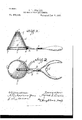
One of the most useful facts in the record is this: Cralle’s patent application was filed in 1896 and granted on February 2, 1897. The patent itself describes “new and useful improvements” in ice-cream molds and dishers and preserves the mechanical drawings behind a tool whose descendants became familiar in kitchens around the world. S. Patent 576,395 — Alfred L. Cralle ice-cream mold and disher and Smithsonian Magazine — Alfred L. Cralle and the ice-cream scoop. Cralle. When a celebrated ‘first’ claim is broader than the evidence safely supports, the narrower documented claim is the stronger history.
Why the technology still matters
The artifact may belong to another era, but the engineering pattern is current. Cralle’s device combined a scoop-like form with a mechanically actuated scraper. The user’s hand supplied the force; the mechanism converted that input into a wiping action across the serving surface, releasing the food without requiring a second utensil or hand. Modern products still win or fail on the same practical questions: does the design reduce friction, risk, time, cost, or error, and can other people use it reliably? Alfred L. Cralle’s exhibit is valuable because it lets readers see those design questions before today’s vocabulary existed.
A lesson for builders now
The strategic lesson is specificity. Saying that Alfred L. Cralle was ‘innovative’ teaches almost nothing. Saying patented a one-handed ice-cream mold and disher identifies an action, a problem, and a technical direction. That is the useful level of detail for builders: understand exactly what changed, why the previous approach was inadequate, and what had to be true for the new approach to work.
The legacy in one clear line
The strongest way to remember Alfred L. Cralle is specific: Patented a one-handed ice-cream mold and disher. Cralle’s exhibit makes an important historical point: technology can be ordinary and still be ingenious. The history of invention is not only about grand machines; it is also about making a repeated human action faster, cleaner and easier. The strongest legacy is the specific, documented contribution itself.