William B. Purvis
Patented an improved fountain pen
The breakthrough, the technology behind it, the world around it, and the impact that followed.
Why William B. Purvis matters
Purvis matters because his career connects everyday product design with manufacturing automation and urban infrastructure. That combination looks surprisingly modern: solve a user problem, improve the production system, then think at network scale. Purvis patented an improved fountain pen design in 1890 intended to make ink flow more reliably while keeping the mechanism simple, durable and practical to carry. His inventive work also included multiple patents involving paper-bag machinery, hand stamps and electric-railway systems.
The life and career around the milestone
William B. Purvis was born August 12, 1838. The 1890 milestone belongs to the documented arc of the career rather than standing as an isolated date. The documented death or current-status entry is August 10, 1914; the life span is listed as 1838–1914. The clearest documented milestone is patented an improved fountain pen. Uncertain biographical details are left unstated rather than guessed.
What problem the work addressed
Purvis is important because the fountain-pen patent was only one part of a broader engineering career. He worked on both consumer mechanisms and industrial machinery, demonstrating the range that independent inventors needed in an era before large corporate R&D laboratories dominated invention. Purvis patented an improved fountain pen design in 1890 intended to make ink flow more reliably while keeping the mechanism simple, durable and practical to carry. His inventive work also included multiple patents involving paper-bag machinery, hand stamps and electric-railway systems.
Inside the technology
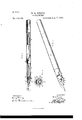
A fountain pen has to meter liquid ink from a reservoir to a writing point without flooding, starving or leaking. Purvis used an elastic tube between the reservoir and nib so excess ink could be returned and flow could be controlled more consistently. Much of Writing systems + manufacturing machinery is invisible to the end user because the important change happens inside a material, formulation, production step, or manufacturing process. The test is repeatability: can the same properties be produced consistently, at useful scale, under real operating conditions? William B. Purvis’s contribution belongs in that process history rather than being reduced to a consumer-product anecdote.
The dated record
The timeline is anchored by 1890. Using the date as an anchor keeps the story testable: readers can separate what was already happening in the field from what followed the documented milestone. No separate company or launch year is stated unless it is supported by the historical evidence. A patent, experiment, or institutional contribution is evidence of technical work; it is not automatically evidence of mass production or commercial success.
From technical work to real-world use
Patent evidence is especially useful in William B. Purvis’s story because it fixes a technical claim to a date and, when drawings survive, shows how the inventor described the mechanism. His paper-bag machinery sought to automate production at higher volume, and his electrical-railway interests pushed him into infrastructure as well as consumer products. The record shows a Black inventor repeatedly treating friction, waste and reliability as engineering problems. A patent still has limits as historical evidence: it does not by itself establish production volume, sales, wealth, or exclusive authorship of every later version of the idea. It documents technical work without implying a broader business claim.
The historical setting
The late nineteenth century was a period of mechanization, railroad growth, urbanization, and expanding patent activity. New devices could solve real industrial problems, yet invention alone did not guarantee capital, manufacturing, distribution, or public credit. William B. Purvis’s milestone belongs inside that wider industrial transition. The technical claim stands on its own without assuming how widely the idea was manufactured or how much money it produced.
What changed because of the work
Purvis is important because the fountain-pen patent was only one part of a broader engineering career. He worked on both consumer mechanisms and industrial machinery, demonstrating the range that independent inventors needed in an era before large corporate R&D laboratories dominated invention. His paper-bag machinery sought to automate production at higher volume, and his electrical-railway interests pushed him into infrastructure as well as consumer products. The record shows a Black inventor repeatedly treating friction, waste and reliability as engineering problems. Taken together, those two pieces show why the milestone matters beyond biography. The first explains the constraint or opportunity; the second shows the change in capability, practice, infrastructure, or recognition that followed. That connection is what turns a dated achievement into technology history rather than a list of names.
What the record says—and what it does not
One of the most useful facts in the record is this: Purvis came from Philadelphia’s prominent Forten-Purvis family, which linked abolition, business and civic leadership. His technical work is part of that broader history of Black institution-building after the Civil War. Purvis and U.S. Patent 419,065 — Fountain Pen. Purvis. When a celebrated ‘first’ claim is broader than the evidence safely supports, the narrower documented claim is the stronger history.
Why the technology still matters
The modern connection is direct in concept even when the tools have changed. Today’s systems still depend on reliable interfaces, good data, trustworthy automation, and architecture that can scale. A fountain pen has to meter liquid ink from a reservoir to a writing point without flooding, starving or leaking. Purvis used an elastic tube between the reservoir and nib so excess ink could be returned and flow could be controlled more consistently. The point is not that every modern product descends directly from William B. Purvis’s work; it is that the same class of engineering problem—how to make information systems dependable and usable—remains central.
A lesson for builders now
For builders, the most transferable lesson is to study the constraint before admiring the artifact. William B. Purvis’s documented milestone was to patented an improved fountain pen. Purvis is important because the fountain-pen patent was only one part of a broader engineering career. He worked on both consumer mechanisms and industrial machinery, demonstrating the range that independent inventors needed in an era before large corporate R&D laboratories dominated invention. A strong product strategy starts the same way: identify the failure, bottleneck, or exclusion clearly enough that the design decision becomes obvious in hindsight.
The legacy in one clear line
The strongest way to remember William B. Purvis is specific: Patented an improved fountain pen. Purvis matters because his career connects everyday product design with manufacturing automation and urban infrastructure. That combination looks surprisingly modern: solve a user problem, improve the production system, then think at network scale. The strongest legacy is the specific, documented contribution itself.