Valerie L. Thomas
Patented the illusion transmitter
The breakthrough, the technology behind it, the world around it, and the impact that followed.
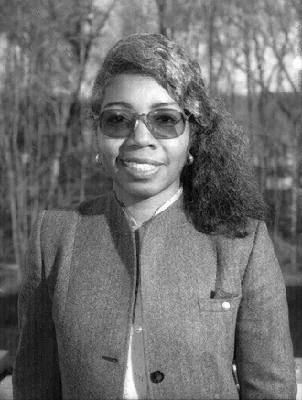
Why Valerie L. Thomas matters
Thomas’ exhibit connects two ideas visitors now take for granted: images as data, and images as engineered experiences. Both became central to modern computing. Thomas patented an 'illusion transmitter' in 1980 after a NASA career that included image-processing work associated with Landsat and other scientific data systems. The patent described producing three-dimensional optical effects using concave mirrors.
The life and career around the milestone
Valerie L. Thomas was born February 8, 1943. The 1980 milestone belongs to the documented arc of the career rather than standing as an isolated date. The documented death or current-status entry is Living; the life span is listed as 1943–present. The clearest documented milestone is patented the illusion transmitter. Uncertain biographical details are left unstated rather than guessed.
What problem the work addressed
Her broader career matters as much as the patent. Remote-sensing programs generate huge amounts of image data, and turning those signals into useful scientific information requires both computing and imaging expertise. Thomas patented an 'illusion transmitter' in 1980 after a NASA career that included image-processing work associated with Landsat and other scientific data systems. The patent described producing three-dimensional optical effects using concave mirrors.
Inside the technology
The system relies on how concave mirrors can form real optical images that appear to occupy space in front of the mirror. Thomas’ design explored transmitting and reproducing that visual effect. In Imaging + space science, small errors can compound quickly. Measurements, interfaces, materials, software, and human procedures have to agree because failure can damage equipment, missions, or lives. Reading Valerie L. Thomas through that systems lens keeps the story grounded: the important work is not simply association with a famous program, but the specific technical capability that made a larger mission more reliable or more possible.
The dated record
The timeline is anchored by 1980. Using the date as an anchor keeps the story testable: readers can separate what was already happening in the field from what followed the documented milestone. No separate company or launch year is stated unless it is supported by the historical evidence. A patent, experiment, or institutional contribution is evidence of technical work; it is not automatically evidence of mass production or commercial success.
From technical work to real-world use
Patent evidence is especially useful in Valerie L. Thomas’s story because it fixes a technical claim to a date and, when drawings survive, shows how the inventor described the mechanism. Thomas managed technical programs and contributed to NASA data systems during a period when digital imaging and remote sensing were rapidly expanding. A patent still has limits as historical evidence: it does not by itself establish production volume, sales, wealth, or exclusive authorship of every later version of the idea. It documents technical work without implying a broader business claim.
The historical setting
From the 1970s into the early networked-computing era, semiconductors, software, telecommunications, and increasingly standardized technical platforms changed how products were built and distributed. Valerie L. Thomas’s milestone sits in a period when technology was moving from specialized institutional systems toward businesses, homes, and global networks. That shift made architecture, compatibility, and scalable production increasingly important forms of innovation.
What changed because of the work
Her broader career matters as much as the patent. Remote-sensing programs generate huge amounts of image data, and turning those signals into useful scientific information requires both computing and imaging expertise. Thomas managed technical programs and contributed to NASA data systems during a period when digital imaging and remote sensing were rapidly expanding. Taken together, those two pieces show why the milestone matters beyond biography. The first explains the constraint or opportunity; the second shows the change in capability, practice, infrastructure, or recognition that followed. That connection is what turns a dated achievement into technology history rather than a list of names.
What the record says—and what it does not
One of the most useful facts in the record is this: She began at NASA in 1964 and worked across mathematics, computer programming, data analysis and project management. Her career included Landsat image processing and later the patented illusion transmitter, a device using concave mirrors to create optical images that appear three-dimensional. Thomas. When a celebrated ‘first’ claim is broader than the evidence safely supports, the narrower documented claim is the stronger history.
Why the technology still matters
The artifact may belong to another era, but the engineering pattern is current. The system relies on how concave mirrors can form real optical images that appear to occupy space in front of the mirror. Thomas’ design explored transmitting and reproducing that visual effect. Modern products still win or fail on the same practical questions: does the design reduce friction, risk, time, cost, or error, and can other people use it reliably? Valerie L. Thomas’s exhibit is valuable because it lets readers see those design questions before today’s vocabulary existed.
A lesson for builders now
A founder looking at Valerie L. Thomas should separate invention from adoption. The milestone—Patented the illusion transmitter—created technical possibility. The impact section shows what happened when that possibility entered use. Modern builders still have to bridge the same gap with manufacturing, distribution, standards, integrations, trust, or customer education.
The legacy in one clear line
The strongest way to remember Valerie L. Thomas is specific: Patented the illusion transmitter. Thomas’ exhibit connects two ideas visitors now take for granted: images as data, and images as engineered experiences. Both became central to modern computing. The strongest legacy is the specific, documented contribution itself.