Timnit Gebru
Co-authored Gender Shades and advanced dataset documentation and responsible-AI research
The breakthrough, the technology behind it, the world around it, and the impact that followed.
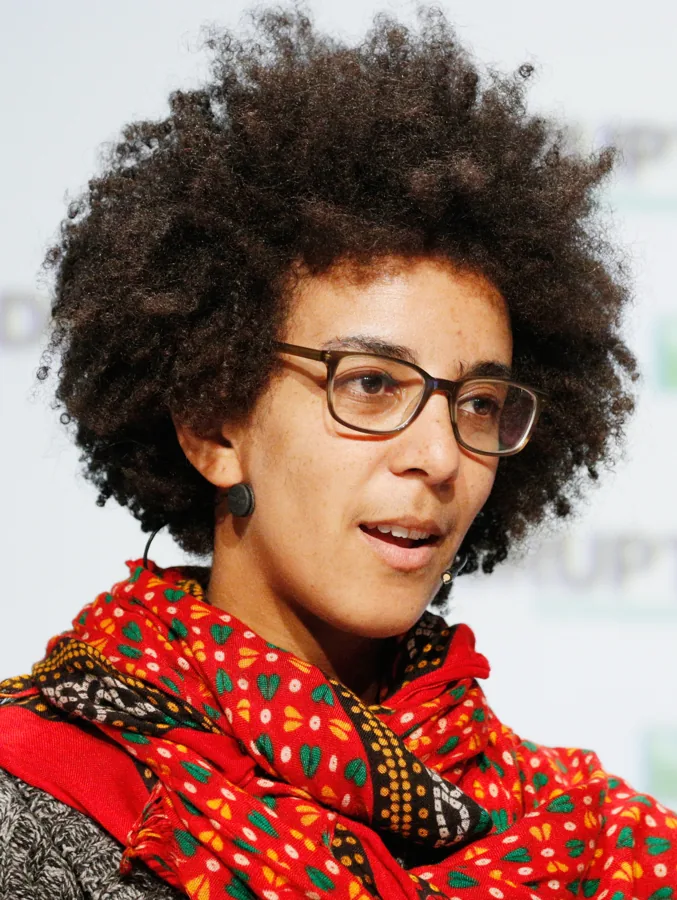
Why Timnit Gebru matters
Gebru co-authored Gender Shades and became a leading researcher on how training data, documentation and institutional incentives shape AI systems. Her work pushed the field to treat datasets as engineered artifacts that need scrutiny, provenance and accountability.
The life and career around the milestone
A precise birth date for Timnit Gebru is not firmly established in the available historical record. The 2018 milestone belongs to the documented arc of the career rather than standing as an isolated date. The documented death or current-status entry is Living; the life span is listed as Living. The clearest documented milestone is co-authored gender shades and advanced dataset documentation and responsible-ai research. Uncertain biographical details are left unstated rather than guessed.
What problem the work addressed
AI safety is not only a model-architecture problem. Poorly understood datasets can encode bias, privacy problems and context failures before a model is ever trained. Gebru co-authored Gender Shades and became a leading researcher on how training data, documentation and institutional incentives shape AI systems. Her work pushed the field to treat datasets as engineered artifacts that need scrutiny, provenance and accountability.
Inside the technology
Machine-learning systems inherit structure from their training data. Dataset documentation records motivation, composition, collection process, recommended uses and limitations so downstream users can evaluate whether data is fit for purpose. The deeper engineering issue in Artificial intelligence + data governance is information flow: what is represented, how components exchange data, what happens when inputs are incomplete, and whether the system remains dependable as use expands. That lens is especially useful for reading Timnit Gebru’s contribution because the visible product or milestone is only one layer; interfaces, data structures, protocols, models, or operating rules determine whether the technology can function beyond a demonstration.
The dated record
The timeline is anchored by 2018 · Gender Shades; 2018 · Datasheets for Datasets work; 2021 · DAIR founded. Those dates matter because the contribution developed across more than one documented step rather than appearing as a single frozen moment. The business or launch record adds another concrete marker: Distributed AI Research Institute founded 2021. That distinction separates technical creation from the organizational work needed to deploy, sell, or sustain technology.
From technical work to real-world use
The story also has an organizational dimension. Gebru’s research helped normalize serious discussion of dataset accountability and the environmental and social risks of large-scale AI. In 2021 she founded the Distributed AI Research Institute. The dated company or launch marker is Distributed AI Research Institute founded 2021. That matters because technology reaches society through institutions: teams have to finance it, operate it, support it, integrate it, and earn enough trust for other people to rely on it. The company is therefore part of the technical story, not a separate footnote.
The historical setting
The modern period surrounding Timnit Gebru is defined by cloud computing, mobile access, data-intensive products, AI, platform businesses, and global technical teams. Speed is higher, but so are the stakes around trust, security, bias, access, regulation, and infrastructure dependence. The milestone on this page matters because it shows Black technologists helping shape those systems rather than appearing only as downstream users of them.
What changed because of the work
AI safety is not only a model-architecture problem. Poorly understood datasets can encode bias, privacy problems and context failures before a model is ever trained. Gebru’s research helped normalize serious discussion of dataset accountability and the environmental and social risks of large-scale AI. In 2021 she founded the Distributed AI Research Institute. Taken together, those two pieces show why the milestone matters beyond biography. The first explains the constraint or opportunity; the second shows the change in capability, practice, infrastructure, or recognition that followed. That connection is what turns a dated achievement into technology history rather than a list of names.
What the record says—and what it does not
One of the most useful facts in the record is this: Gender Shades paired Gebru’s research with Joy Buolamwini’s audit methodology to expose demographic performance gaps in commercial gender-classification systems. When a celebrated ‘first’ claim is broader than the evidence safely supports, the narrower documented claim is the stronger history.
Why the technology still matters
The modern connection is direct in concept even when the tools have changed. Today’s systems still depend on reliable interfaces, good data, trustworthy automation, and architecture that can scale. Machine-learning systems inherit structure from their training data. Dataset documentation records motivation, composition, collection process, recommended uses and limitations so downstream users can evaluate whether data is fit for purpose. The point is not that every modern product descends directly from Timnit Gebru’s work; it is that the same class of engineering problem—how to make information systems dependable and usable—remains central.
A lesson for builders now
The business lesson is not to imitate the historical product. It is to imitate the discipline behind the problem selection. AI safety is not only a model-architecture problem. Poorly understood datasets can encode bias, privacy problems and context failures before a model is ever trained. Timnit Gebru’s work shows why a recurring operational pain, safety risk, infrastructure gap, or access problem can be more valuable than an idea that merely sounds futuristic.
The legacy in one clear line
The strongest way to remember Timnit Gebru is specific: Co-authored Gender Shades and advanced dataset documentation and responsible-AI research. The strongest legacy is the specific, documented contribution itself.