Thomas Elkins
Patented an apparatus for refrigerating and preserving food and other materials
The breakthrough, the technology behind it, the world around it, and the impact that followed.
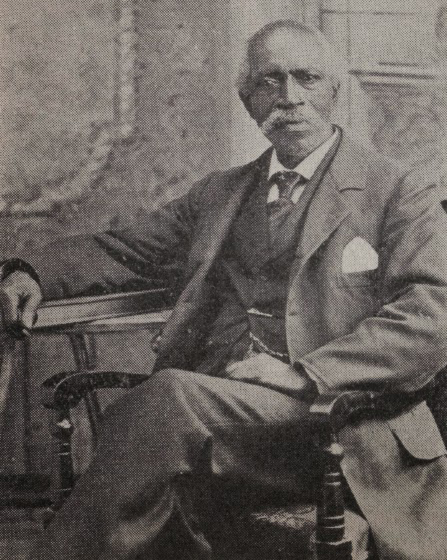
Why Thomas Elkins matters
Elkins helps widen the history beyond the most frequently repeated inventor names. His record shows why patent documents and local archives matter: they reveal technical lives that disappear when history is reduced to a handful of textbook figures. Elkins was an Albany physician, abolitionist and inventor whose 1879 patent described an apparatus intended to improve refrigeration and preservation. He also patented a combined dining, ironing and quilting table in 1870 and a chamber commode in 1872.
The life and career around the milestone
Thomas Elkins was born 1818. The 1879 milestone belongs to the documented arc of the career rather than standing as an isolated date. The documented death or current-status entry is August 10, 1900; the life span is listed as 1818–1900. The clearest documented milestone is patented an apparatus for refrigerating and preserving food and other materials. Uncertain biographical details are left unstated rather than guessed.
What problem the work addressed
Elkins matters because his patents show a Black professional moving between medicine, civic life and practical engineering during Reconstruction. His work matters because it demonstrates documented experimentation with household systems and preservation technology, not because it needs a mythical “first” attached to it. Elkins was an Albany physician, abolitionist and inventor whose 1879 patent described an apparatus intended to improve refrigeration and preservation. He also patented a combined dining, ironing and quilting table in 1870 and a chamber commode in 1872.
Inside the technology
His refrigeration patent dealt with insulated storage and cooling arrangements for preserving food and other materials at a time when mechanical refrigeration was still developing. The practical engineering problem was familiar but difficult: slow heat transfer into a protected chamber and maintain a colder environment without modern electric compressors. Technology in Refrigeration + medical technology has to satisfy two tests at once: the underlying science must be sound, and the result must be safe and usable around real human bodies and clinical practice. That is why Thomas Elkins’s work should be judged by more than novelty. Validation, repeatability, risk reduction, and practical adoption are part of the technical achievement.
The dated record
The timeline is anchored by 1870, 1872 and 1879 · three documented U.S. patents. Those dates matter because the contribution developed across more than one documented step rather than appearing as a single frozen moment. No separate company or launch year is stated unless it is supported by the historical evidence. A patent, experiment, or institutional contribution is evidence of technical work; it is not automatically evidence of mass production or commercial success.
From technical work to real-world use
Patent evidence is especially useful in Thomas Elkins’s story because it fixes a technical claim to a date and, when drawings survive, shows how the inventor described the mechanism. The patents are part of a larger record of Black invention in the nineteenth century. Elkins also served his community as a physician and was involved in abolitionist activity in Albany, making his technical work part of a much broader life of public service. A patent still has limits as historical evidence: it does not by itself establish production volume, sales, wealth, or exclusive authorship of every later version of the idea. It documents technical work without implying a broader business claim.
The historical setting
The late nineteenth century was a period of mechanization, railroad growth, urbanization, and expanding patent activity. New devices could solve real industrial problems, yet invention alone did not guarantee capital, manufacturing, distribution, or public credit. Thomas Elkins’s milestone belongs inside that wider industrial transition. The technical claim stands on its own without assuming how widely the idea was manufactured or how much money it produced.
What changed because of the work
Elkins matters because his patents show a Black professional moving between medicine, civic life and practical engineering during Reconstruction. His work matters because it demonstrates documented experimentation with household systems and preservation technology, not because it needs a mythical “first” attached to it. The patents are part of a larger record of Black invention in the nineteenth century. Elkins also served his community as a physician and was involved in abolitionist activity in Albany, making his technical work part of a much broader life of public service. Taken together, those two pieces show why the milestone matters beyond biography. The first explains the constraint or opportunity; the second shows the change in capability, practice, infrastructure, or recognition that followed. That connection is what turns a dated achievement into technology history rather than a list of names.
What the record says—and what it does not
One of the most useful facts in the record is this: The same inventor associated with the 1879 refrigeration patent also designed multifunction furniture years earlier, showing that his patent activity was not limited to one problem or one industry. Thomas Elkins. When a celebrated ‘first’ claim is broader than the evidence safely supports, the narrower documented claim is the stronger history.
Why the technology still matters
The modern connection is direct in concept even when the tools have changed. Today’s systems still depend on reliable interfaces, good data, trustworthy automation, and architecture that can scale. His refrigeration patent dealt with insulated storage and cooling arrangements for preserving food and other materials at a time when mechanical refrigeration was still developing. The practical engineering problem was familiar but difficult: slow heat transfer into a protected chamber and maintain a colder environment without modern electric compressors. The point is not that every modern product descends directly from Thomas Elkins’s work; it is that the same class of engineering problem—how to make information systems dependable and usable—remains central.
A lesson for builders now
The business lesson is not to imitate the historical product. It is to imitate the discipline behind the problem selection. Elkins matters because his patents show a Black professional moving between medicine, civic life and practical engineering during Reconstruction. His work matters because it demonstrates documented experimentation with household systems and preservation technology, not because it needs a mythical “first” attached to it. Thomas Elkins’s work shows why a recurring operational pain, safety risk, infrastructure gap, or access problem can be more valuable than an idea that merely sounds futuristic.
The legacy in one clear line
The strongest way to remember Thomas Elkins is specific: Patented an apparatus for refrigerating and preserving food and other materials. Elkins helps widen the history beyond the most frequently repeated inventor names. His record shows why patent documents and local archives matter: they reveal technical lives that disappear when history is reduced to a handful of textbook figures. The strongest legacy is the specific, documented contribution itself.