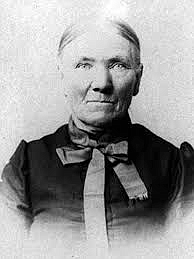
Sarah E. Goode
Patented a folding cabinet bed for compact urban living
The breakthrough, the technology behind it, the world around it, and the impact that followed.
Why Sarah E. Goode matters
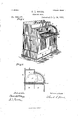
Goode’s exhibit is a reminder that good technology frequently begins with ordinary human friction. Limited floor space may sound less dramatic than locomotives or electricity, but designing one room to do more is exactly the kind of constraint-driven innovation that modern product designers still solve. Sarah E. Goode received U.S. Patent No. 322,177 in 1885 for a cabinet bed designed to fold so that it occupied less space and resembled a piece of furniture when closed. Her design addressed the practical problem of fitting sleeping space and useful furniture into small rooms.
The life and career around the milestone
Sarah E. Goode was born c. 1855. The 1885 milestone belongs to the documented arc of the career rather than standing as an isolated date. The documented death or current-status entry is April 1905; the life span is listed as c. 1855–1905. The clearest documented milestone is patented a folding cabinet bed for compact urban living. Uncertain biographical details are left unstated rather than guessed.
What problem the work addressed
Urban technology is often about space. A room has fixed dimensions, while the people living in it need multiple functions from the same area. Goode treated furniture as a mechanical system rather than a static object, turning transformation itself into the solution. Sarah E. Goode received U.S. Patent No. 322,177 in 1885 for a cabinet bed designed to fold so that it occupied less space and resembled a piece of furniture when closed. Her design addressed the practical problem of fitting sleeping space and useful furniture into small rooms.
Inside the technology
Goode’s design combined hinges, folding geometry, supports and counterbalancing considerations so a full-size sleeping surface could transform into a compact cabinet-like form. It is an early example of transformable product design: one physical footprint serving more than one function depending on configuration. In Furniture + space-saving design, small errors can compound quickly. Measurements, interfaces, materials, software, and human procedures have to agree because failure can damage equipment, missions, or lives. Reading Sarah E. Goode through that systems lens keeps the story grounded: the important work is not simply association with a famous program, but the specific technical capability that made a larger mission more reliable or more possible.
The dated record
The timeline is anchored by 1885. Using the date as an anchor keeps the story testable: readers can separate what was already happening in the field from what followed the documented milestone. No separate company or launch year is stated unless it is supported by the historical evidence. A patent, experiment, or institutional contribution is evidence of technical work; it is not automatically evidence of mass production or commercial success.
From technical work to real-world use
Patent evidence is especially useful in Sarah E. Goode’s story because it fixes a technical claim to a date and, when drawings survive, shows how the inventor described the mechanism. Her 1885 patent is an important documented example of Black women participating in the U.S. patent system during the nineteenth century. The cabinet-bed also belongs to the continuing history of transformable furniture used in apartments, hotels, dormitories and other space-constrained environments. A patent still has limits as historical evidence: it does not by itself establish production volume, sales, wealth, or exclusive authorship of every later version of the idea. It documents technical work without implying a broader business claim.
The historical setting
The late nineteenth century was a period of mechanization, railroad growth, urbanization, and expanding patent activity. New devices could solve real industrial problems, yet invention alone did not guarantee capital, manufacturing, distribution, or public credit. Sarah E. Goode’s milestone belongs inside that wider industrial transition. The technical claim stands on its own without assuming how widely the idea was manufactured or how much money it produced.
What changed because of the work
Urban technology is often about space. A room has fixed dimensions, while the people living in it need multiple functions from the same area. Goode treated furniture as a mechanical system rather than a static object, turning transformation itself into the solution. Her 1885 patent is an important documented example of Black women participating in the U.S. patent system during the nineteenth century. The cabinet-bed also belongs to the continuing history of transformable furniture used in apartments, hotels, dormitories and other space-constrained environments. Taken together, those two pieces show why the milestone matters beyond biography. The first explains the constraint or opportunity; the second shows the change in capability, practice, infrastructure, or recognition that followed. That connection is what turns a dated achievement into technology history rather than a list of names.
What the record says—and what it does not
One of the most useful facts in the record is this: Goode is often described online as the first Black woman to receive a U.S. patent, but patent historians have identified earlier Black women patentees. The stronger history focuses on what is firmly documented: her 1885 cabinet-bed patent and its clever space-saving mechanism. Goode cabinet-bed patent file, U.S. Patent 322,177 — Sarah E. Goode cabinet bed and Smithsonian Magazine — Black women inventors and domestic technology. Goode. When a celebrated ‘first’ claim is broader than the evidence safely supports, the narrower documented claim is the stronger history.
Why the technology still matters
The artifact may belong to another era, but the engineering pattern is current. Goode’s design combined hinges, folding geometry, supports and counterbalancing considerations so a full-size sleeping surface could transform into a compact cabinet-like form. It is an early example of transformable product design: one physical footprint serving more than one function depending on configuration. Modern products still win or fail on the same practical questions: does the design reduce friction, risk, time, cost, or error, and can other people use it reliably? Sarah E. Goode’s exhibit is valuable because it lets readers see those design questions before today’s vocabulary existed.
A lesson for builders now
The strategic lesson is specificity. Saying that Sarah E. Goode was ‘innovative’ teaches almost nothing. Saying patented a folding cabinet bed for compact urban living identifies an action, a problem, and a technical direction. That is the useful level of detail for builders: understand exactly what changed, why the previous approach was inadequate, and what had to be true for the new approach to work.
The legacy in one clear line
The strongest way to remember Sarah E. Goode is specific: Patented a folding cabinet bed for compact urban living. Goode’s exhibit is a reminder that good technology frequently begins with ordinary human friction. Limited floor space may sound less dramatic than locomotives or electricity, but designing one room to do more is exactly the kind of constraint-driven innovation that modern product designers still solve. The strongest legacy is the specific, documented contribution itself.