Samuel R. Scottron
Patented an adjustable mirror system
The breakthrough, the technology behind it, the world around it, and the impact that followed.
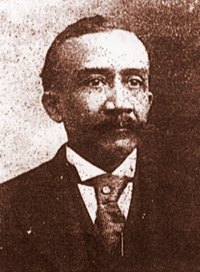
Why Samuel R. Scottron matters
Placed between Lewis Temple and the electrical-age inventors, Scottron broadens the history beyond famous industrial machines. Technology also advances through mechanisms that make ordinary tools more adaptable, efficient and human-centered. Scottron turned a practical problem he had seen in barber shops into an adjustable mirror arrangement that let customers see themselves from multiple angles. He later patented additional household-hardware designs, including window cornices, a curtain rod, a supporting bracket and a pole tip.
The life and career around the milestone
Samuel R. Scottron was born February 1841 · records vary on the year. The 1868 milestone belongs to the documented arc of the career rather than standing as an isolated date. The documented death or current-status entry is October 14, 1908; the life span is listed as c. 1841–1908. The clearest documented milestone is patented an adjustable mirror system. Uncertain biographical details are left unstated rather than guessed.
What problem the work addressed
Scottron matters because his career shows Black invention moving through product design, manufacturing, entrepreneurship and civic life at the same time. His patents were not abstract demonstrations; they addressed everyday usability and commercial products. Scottron turned a practical problem he had seen in barber shops into an adjustable mirror arrangement that let customers see themselves from multiple angles. He later patented additional household-hardware designs, including window cornices, a curtain rod, a supporting bracket and a pole tip.
Inside the technology
The core idea was controlled positioning: mounting a mirror so its angle could be changed and held where needed. That sounds simple now, but good product engineering often begins by replacing an awkward fixed object with a mechanism that adjusts to the user. The practical engineering question in Industrial design + household hardware is whether the idea survives repeated use. Materials, geometry, motion, timing, controls, and the person operating the device all have to work together. For Samuel R. Scottron, that means the milestone should be examined as a functioning system—not as a trivia fact. The contribution mattered because a physical task or risk was translated into a design that could be described, built, tested, or used.
The dated record
The timeline is anchored by 1868. Using the date as an anchor keeps the story testable: readers can separate what was already happening in the field from what followed the documented milestone. No separate company or launch year is stated unless it is supported by the historical evidence. A patent, experiment, or institutional contribution is evidence of technical work; it is not automatically evidence of mass production or commercial success.
From technical work to real-world use
Patent evidence is especially useful in Samuel R. Scottron’s story because it fixes a technical claim to a date and, when drawings survive, shows how the inventor described the mechanism. His adjustable-mirror work became associated with the multi-angle barber mirror, while his later patents show a sustained career rather than a single lucky idea. He also studied at Cooper Union and became active in Brooklyn civic and political life. A patent still has limits as historical evidence: it does not by itself establish production volume, sales, wealth, or exclusive authorship of every later version of the idea. It documents technical work without implying a broader business claim.
The historical setting
The late nineteenth century was a period of mechanization, railroad growth, urbanization, and expanding patent activity. New devices could solve real industrial problems, yet invention alone did not guarantee capital, manufacturing, distribution, or public credit. Samuel R. Scottron’s milestone belongs inside that wider industrial transition. The technical claim stands on its own without assuming how widely the idea was manufactured or how much money it produced.
What changed because of the work
Scottron matters because his career shows Black invention moving through product design, manufacturing, entrepreneurship and civic life at the same time. His patents were not abstract demonstrations; they addressed everyday usability and commercial products. His adjustable-mirror work became associated with the multi-angle barber mirror, while his later patents show a sustained career rather than a single lucky idea. He also studied at Cooper Union and became active in Brooklyn civic and political life. Taken together, those two pieces show why the milestone matters beyond biography. The first explains the constraint or opportunity; the second shows the change in capability, practice, infrastructure, or recognition that followed. That connection is what turns a dated achievement into technology history rather than a list of names.
What the record says—and what it does not
One of the most useful facts in the record is this: Scottron was already an entrepreneur before completing engineering studies at Cooper Union. His path is a reminder that invention often comes from people who first encounter a problem through work, customers and daily observation. Scottron and BlackPast — Samuel Raymond Scottron. Scottron. When a celebrated ‘first’ claim is broader than the evidence safely supports, the narrower documented claim is the stronger history.
Why the technology still matters
The artifact may belong to another era, but the engineering pattern is current. The core idea was controlled positioning: mounting a mirror so its angle could be changed and held where needed. That sounds simple now, but good product engineering often begins by replacing an awkward fixed object with a mechanism that adjusts to the user. Modern products still win or fail on the same practical questions: does the design reduce friction, risk, time, cost, or error, and can other people use it reliably? Samuel R. Scottron’s exhibit is valuable because it lets readers see those design questions before today’s vocabulary existed.
A lesson for builders now
A founder looking at Samuel R. Scottron should separate invention from adoption. The milestone—Patented an adjustable mirror system—created technical possibility. The impact section shows what happened when that possibility entered use. Modern builders still have to bridge the same gap with manufacturing, distribution, standards, integrations, trust, or customer education.
The legacy in one clear line
The strongest way to remember Samuel R. Scottron is specific: Patented an adjustable mirror system. Placed between Lewis Temple and the electrical-age inventors, Scottron broadens the history beyond famous industrial machines. Technology also advances through mechanisms that make ordinary tools more adaptable, efficient and human-centered. The strongest legacy is the specific, documented contribution itself.