Richard B. Spikes
Patented an automatic gear-shift mechanism
The breakthrough, the technology behind it, the world around it, and the impact that followed.
Why Richard B. Spikes matters
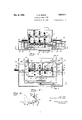
Spikes helps a more mature innovation story: invention is often a crowded field. Multiple engineers can attack the same problem, and patent history gives us a way to identify what a particular person actually claimed and built. Richard B. Spikes received U.S. Patent No. 1,889,814 in 1932 for an automatic gear shift. Across a long inventive career he patented multiple devices and mechanical improvements, including technologies related to dispensing, automotive control and braking.
The life and career around the milestone
Richard B. Spikes was born October 2, 1878. The 1932 milestone belongs to the documented arc of the career rather than standing as an isolated date. The documented death or current-status entry is 1960s · published records differ; the life span is listed as 1878–1960s. The clearest documented milestone is patented an automatic gear-shift mechanism. Uncertain biographical details are left unstated rather than guessed.
What problem the work addressed
Transportation technology is built through layers of control. Making gear changes easier and more automatic reduces driver workload and can make vehicle operation more consistent. Spikes repeatedly worked in this practical territory—mechanisms that make machines easier or safer to operate. Richard B. Spikes received U.S. Patent No. 1,889,814 in 1932 for an automatic gear shift. Across a long inventive career he patented multiple devices and mechanical improvements, including technologies related to dispensing, automotive control and braking.
Inside the technology
An automatic shifting mechanism has to coordinate vehicle speed, engine conditions and mechanical engagement so gear changes happen without the full sequence of manual control. Spikes’s 1932 patent belongs to a broader history of transmission development and should be understood as a specific patented mechanism within that evolving field, not as the sole invention of the automatic transmission. The practical engineering question in Automotive + mechanical systems is whether the idea survives repeated use. Materials, geometry, motion, timing, controls, and the person operating the device all have to work together. For Richard B. Spikes, that means the milestone should be examined as a functioning system—not as a trivia fact. The contribution mattered because a physical task or risk was translated into a design that could be described, built, tested, or used.
The dated record
The timeline is anchored by 1932. Using the date as an anchor keeps the story testable: readers can separate what was already happening in the field from what followed the documented milestone. No separate company or launch year is stated unless it is supported by the historical evidence. A patent, experiment, or institutional contribution is evidence of technical work; it is not automatically evidence of mass production or commercial success.
From technical work to real-world use
Patent evidence is especially useful in Richard B. Spikes’s story because it fixes a technical claim to a date and, when drawings survive, shows how the inventor described the mechanism. His patent portfolio illustrates a Black inventor sustaining technical creativity across decades and industries. The automatic-gear-shift patent is especially useful for showing how automotive technology evolved through competing and overlapping mechanisms before later mass-produced automatic transmissions became standard. A patent still has limits as historical evidence: it does not by itself establish production volume, sales, wealth, or exclusive authorship of every later version of the idea. It documents technical work without implying a broader business claim.
The historical setting
By the early twentieth century, automobiles, utilities, factories, mass production, and professional engineering were remaking daily life. Jim Crow segregation and discriminatory hiring shaped the American economy at the same time. Richard B.
What changed because of the work
Transportation technology is built through layers of control. Making gear changes easier and more automatic reduces driver workload and can make vehicle operation more consistent. Spikes repeatedly worked in this practical territory—mechanisms that make machines easier or safer to operate. His patent portfolio illustrates a Black inventor sustaining technical creativity across decades and industries. The automatic-gear-shift patent is especially useful for showing how automotive technology evolved through competing and overlapping mechanisms before later mass-produced automatic transmissions became standard. Taken together, those two pieces show why the milestone matters beyond biography. The first explains the constraint or opportunity; the second shows the change in capability, practice, infrastructure, or recognition that followed. That connection is what turns a dated achievement into technology history rather than a list of names.
What the record says—and what it does not
One of the most useful facts in the record is this: Spikes is often credited online with inventing the automatic transmission itself or the first turn signal. Those claims overreach the record. The documented record supports the patents he actually held, including the 1932 automatic gear-shift mechanism, without erasing earlier work by other inventors. S. Patent 1,889,814 — Richard B. Spikes automatic gear shift and BlackPast — Richard Spikes. Spikes. When a celebrated ‘first’ claim is broader than the evidence safely supports, the narrower documented claim is the stronger history.
Why the technology still matters
The artifact may belong to another era, but the engineering pattern is current. An automatic shifting mechanism has to coordinate vehicle speed, engine conditions and mechanical engagement so gear changes happen without the full sequence of manual control. Spikes’s 1932 patent belongs to a broader history of transmission development and should be understood as a specific patented mechanism within that evolving field, not as the sole invention of the automatic transmission. Modern products still win or fail on the same practical questions: does the design reduce friction, risk, time, cost, or error, and can other people use it reliably? Richard B. Spikes’s exhibit is valuable because it lets readers see those design questions before today’s vocabulary existed.
A lesson for builders now
For builders, the most transferable lesson is to study the constraint before admiring the artifact. Richard B. Spikes’s documented milestone was to patented an automatic gear-shift mechanism. Transportation technology is built through layers of control. Making gear changes easier and more automatic reduces driver workload and can make vehicle operation more consistent. Spikes repeatedly worked in this practical territory—mechanisms that make machines easier or safer to operate. A strong product strategy starts the same way: identify the failure, bottleneck, or exclusion clearly enough that the design decision becomes obvious in hindsight.
The legacy in one clear line
The strongest way to remember Richard B. Spikes is specific: Patented an automatic gear-shift mechanism. Spikes helps a more mature innovation story: invention is often a crowded field. Multiple engineers can attack the same problem, and patent history gives us a way to identify what a particular person actually claimed and built. The strongest legacy is the specific, documented contribution itself.