Raye Montague
Produced a computer-generated U.S. naval ship design in about 19 hours
The breakthrough, the technology behind it, the world around it, and the impact that followed.
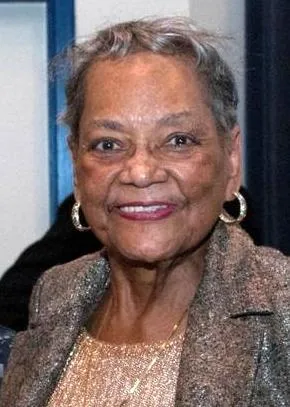
Why Raye Montague matters
In 1971 Montague was given roughly a month to produce a computer-generated ship design. By adapting the Navy’s existing automated systems, she produced the rough design for what became the Oliver Hazard Perry-class frigate in roughly 19 hours—an achievement the Navy remembers as a landmark in computer-aided ship design.
The life and career around the milestone
Raye Montague was born January 21, 1935. The 1971 milestone belongs to the documented arc of the career rather than standing as an isolated date. The documented death or current-status entry is October 10, 2018; the life span is listed as 1935–2018. The clearest documented milestone is produced a computer-generated u.s. naval ship design in about 19 hours. Uncertain biographical details are left unstated rather than guessed.
What problem the work addressed
Montague’s work demonstrates what computing looked like before personal computers: expensive institutional systems, specialized programming and engineers who had to understand both the machine and the physical object being designed. In 1971 Montague was given roughly a month to produce a computer-generated ship design. By adapting the Navy’s existing automated systems, she produced the rough design for what became the Oliver Hazard Perry-class frigate in roughly 19 hours—an achievement the Navy remembers as a landmark in computer-aided ship design.
Inside the technology
Naval architecture combines hull geometry, stability, propulsion, structures, space allocation and many other constraints. Computer-aided design lets engineers encode and revise those relationships computationally rather than redrawing the ship manually every time a parameter changes. The deeper engineering issue in Computer-aided ship design is information flow: what is represented, how components exchange data, what happens when inputs are incomplete, and whether the system remains dependable as use expands. That lens is especially useful for reading Raye Montague’s contribution because the visible product or milestone is only one layer; interfaces, data structures, protocols, models, or operating rules determine whether the technology can function beyond a demonstration.
The dated record
The timeline is anchored by 1956–1990 · U.S. Navy career; 1971 · computer-generated ship design breakthrough. Those dates matter because the contribution developed across more than one documented step rather than appearing as a single frozen moment. No separate company or launch year is stated unless it is supported by the historical evidence. A patent, experiment, or institutional contribution is evidence of technical work; it is not automatically evidence of mass production or commercial success.
From technical work to real-world use
The path from idea to use is visible through the documented impact: She went on to hold senior Navy engineering and program roles and helped push digital design deeper into naval shipbuilding. Her career is now recognized by the Naval History and Heritage Command as a major innovation story. The evidence does not establish a broader commercial story, so none is implied. Instead, it asks the narrower engineering question: did the work create a usable mechanism, process, method, system, or body of knowledge that changed what other people could do? That is the standard applied here.
The historical setting
From the 1970s into the early networked-computing era, semiconductors, software, telecommunications, and increasingly standardized technical platforms changed how products were built and distributed. Raye Montague’s milestone sits in a period when technology was moving from specialized institutional systems toward businesses, homes, and global networks. That shift made architecture, compatibility, and scalable production increasingly important forms of innovation.
What changed because of the work
Montague’s work demonstrates what computing looked like before personal computers: expensive institutional systems, specialized programming and engineers who had to understand both the machine and the physical object being designed. She went on to hold senior Navy engineering and program roles and helped push digital design deeper into naval shipbuilding. Her career is now recognized by the Naval History and Heritage Command as a major innovation story. Taken together, those two pieces show why the milestone matters beyond biography. The first explains the constraint or opportunity; the second shows the change in capability, practice, infrastructure, or recognition that followed. That connection is what turns a dated achievement into technology history rather than a list of names.
What the record says—and what it does not
One of the most useful facts in the record is this: Montague entered the Navy as a clerk typist in 1956. She learned computing on the job and through night courses before becoming a computer systems analyst and engineering leader. When a celebrated ‘first’ claim is broader than the evidence safely supports, the narrower documented claim is the stronger history.
Why the technology still matters
The modern connection is direct in concept even when the tools have changed. Today’s systems still depend on reliable interfaces, good data, trustworthy automation, and architecture that can scale. Naval architecture combines hull geometry, stability, propulsion, structures, space allocation and many other constraints. Computer-aided design lets engineers encode and revise those relationships computationally rather than redrawing the ship manually every time a parameter changes. The point is not that every modern product descends directly from Raye Montague’s work; it is that the same class of engineering problem—how to make information systems dependable and usable—remains central.
A lesson for builders now
The strategic lesson is specificity. Saying that Raye Montague was ‘innovative’ teaches almost nothing. Saying produced a computer-generated u.s. naval ship design in about 19 hours identifies an action, a problem, and a technical direction. That is the useful level of detail for builders: understand exactly what changed, why the previous approach was inadequate, and what had to be true for the new approach to work.
The legacy in one clear line
The strongest way to remember Raye Montague is specific: Produced a computer-generated U.S. naval ship design in about 19 hours. The strongest legacy is the specific, documented contribution itself.