Nii Narku Quaynor
Helped establish early Internet connectivity and institutions across Africa
The breakthrough, the technology behind it, the world around it, and the impact that followed.
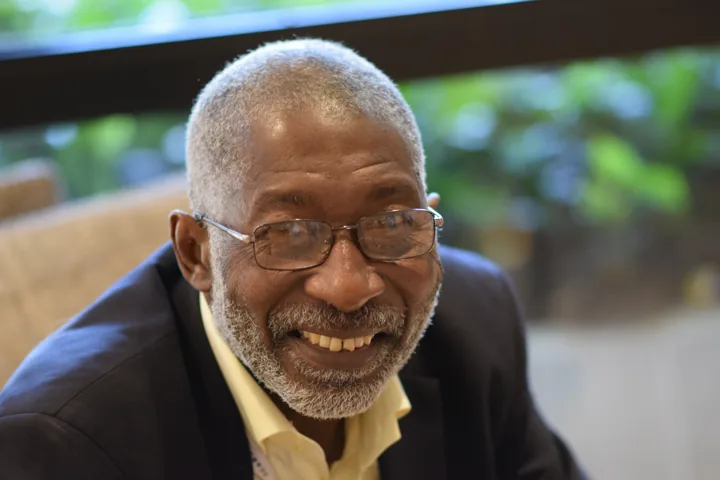
Why Nii Narku Quaynor matters
Quaynor helped establish some of Africa’s earliest Internet connections and spent decades building the technical and institutional foundations needed for the network to grow across the continent.
The life and career around the milestone
Nii Narku Quaynor was born 1949. The 1995 milestone belongs to the documented arc of the career rather than standing as an isolated date. The documented death or current-status entry is Living; the life span is listed as 1949–present. The clearest documented milestone is helped establish early internet connectivity and institutions across africa. Uncertain biographical details are left unstated rather than guessed.
What problem the work addressed
The Internet only becomes global when local engineers build networks, train operators and create regional institutions. African connectivity was not simply delivered from elsewhere; engineers on the continent built it. Quaynor helped establish some of Africa’s earliest Internet connections and spent decades building the technical and institutional foundations needed for the network to grow across the continent.
Inside the technology
Internet infrastructure depends on routing, addressing, network operators, peering, technical training and governance. Quaynor’s work crossed all of those layers rather than treating connectivity as a single cable or website. The deeper engineering issue in Internet infrastructure + networking is information flow: what is represented, how components exchange data, what happens when inputs are incomplete, and whether the system remains dependable as use expands. That lens is especially useful for reading Nii Narku Quaynor’s contribution because the visible product or milestone is only one layer; interfaces, data structures, protocols, models, or operating rules determine whether the technology can function beyond a demonstration.
The dated record
The timeline is anchored by 1990s · early Ghana/Africa Internet connectivity; 2000s · AfNOG and AfriNIC institution-building. Those dates matter because the contribution developed across more than one documented step rather than appearing as a single frozen moment. No separate company or launch year is stated unless it is supported by the historical evidence. A patent, experiment, or institutional contribution is evidence of technical work; it is not automatically evidence of mass production or commercial success.
From technical work to real-world use
The story also has an organizational dimension. Quaynor helped launch the African Network Operators Group and served as founding chairman of AfriNIC, the regional Internet numbers registry for Africa. The Internet Hall of Fame recognizes him as a pioneer. That matters because technology reaches society through institutions: teams have to finance it, operate it, support it, integrate it, and earn enough trust for other people to rely on it. The company is therefore part of the technical story, not a separate footnote.
The historical setting
The commercial internet and rapid mobile-network expansion changed the economics of distribution. Software and communications products could cross borders faster, while many regions leapfrogged limited fixed infrastructure through mobile systems. Nii Narku Quaynor’s work belongs to this transition, when technology companies increasingly built platforms and infrastructure that other businesses could use rather than selling only a single standalone product.
What changed because of the work
The Internet only becomes global when local engineers build networks, train operators and create regional institutions. African connectivity was not simply delivered from elsewhere; engineers on the continent built it. Quaynor helped launch the African Network Operators Group and served as founding chairman of AfriNIC, the regional Internet numbers registry for Africa. The Internet Hall of Fame recognizes him as a pioneer. Taken together, those two pieces show why the milestone matters beyond biography. The first explains the constraint or opportunity; the second shows the change in capability, practice, infrastructure, or recognition that followed. That connection is what turns a dated achievement into technology history rather than a list of names.
What the record says—and what it does not
One of the most useful facts in the record is this: He was the first African elected to the ICANN board and was inducted into the Internet Hall of Fame in 2013. When a celebrated ‘first’ claim is broader than the evidence safely supports, the narrower documented claim is the stronger history.
Why the technology still matters
The modern connection is direct in concept even when the tools have changed. Today’s systems still depend on reliable interfaces, good data, trustworthy automation, and architecture that can scale. Internet infrastructure depends on routing, addressing, network operators, peering, technical training and governance. Quaynor’s work crossed all of those layers rather than treating connectivity as a single cable or website. The point is not that every modern product descends directly from Nii Narku Quaynor’s work; it is that the same class of engineering problem—how to make information systems dependable and usable—remains central.
A lesson for builders now
The business lesson is not to imitate the historical product. It is to imitate the discipline behind the problem selection. The Internet only becomes global when local engineers build networks, train operators and create regional institutions. African connectivity was not simply delivered from elsewhere; engineers on the continent built it. Nii Narku Quaynor’s work shows why a recurring operational pain, safety risk, infrastructure gap, or access problem can be more valuable than an idea that merely sounds futuristic.
The legacy in one clear line
The strongest way to remember Nii Narku Quaynor is specific: Helped establish early Internet connectivity and institutions across Africa. The strongest legacy is the specific, documented contribution itself.