Miriam E. Benjamin
Patented the Gong and Signal Chair
The breakthrough, the technology behind it, the world around it, and the impact that followed.
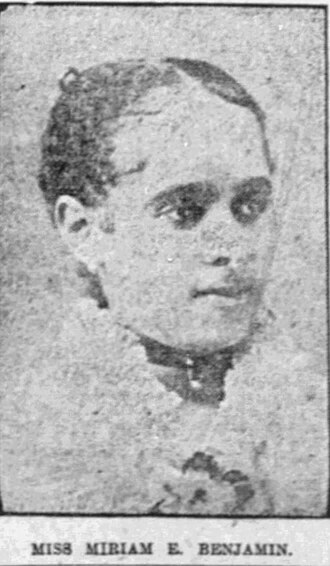
Why Miriam E. Benjamin matters
Benjamin deserves more than a “Black woman inventor” sidebar. Her chair was a communications system embedded in an everyday object, and her career demonstrates how invention, law and public administration could converge in the life of a Black woman working in the nineteenth-century capital. In 1888, educator and federal civil servant Miriam E. Benjamin received a patent for her Gong and Signal Chair, a system that allowed a seated person to signal an attendant and visually indicate which chair had called for service.
The life and career around the milestone
Miriam E. Benjamin was born September 16, 1861. The 1888 milestone belongs to the documented arc of the career rather than standing as an isolated date. The documented death or current-status entry is 1947; the life span is listed as 1861–1947. The clearest documented milestone is patented the gong and signal chair. Uncertain biographical details are left unstated rather than guessed.
What problem the work addressed
Benjamin recognized a workflow problem and designed a user interface for it decades before anyone would use that phrase. Her proposal was meant for settings such as hotels, restaurants and legislative chambers, where a simple signal could reduce unnecessary movement and make service more efficient. In 1888, educator and federal civil servant Miriam E. Benjamin received a patent for her Gong and Signal Chair, a system that allowed a seated person to signal an attendant and visually indicate which chair had called for service.
Inside the technology
The chair linked a user-operated signal with an audible gong and a visible indicator. The important idea was not the furniture itself; it was the coordination of request, alert and location—an early service-call system designed to make communication between customers and attendants faster and clearer. Work in Communication systems + service technology is constrained by reach, signal quality, compatibility, capacity, and reliability. A communications system is valuable only when information can move between endpoints under real conditions, not merely in a controlled test. For Miriam E. Benjamin, that makes the architecture around the breakthrough as important as the individual component: the contribution sits inside a network whose usefulness grows when more people, devices, or institutions can connect through it.
The dated record
The timeline is anchored by 1888. Using the date as an anchor keeps the story testable: readers can separate what was already happening in the field from what followed the documented milestone. No separate company or launch year is stated unless it is supported by the historical evidence. A patent, experiment, or institutional contribution is evidence of technical work; it is not automatically evidence of mass production or commercial success.
From technical work to real-world use
Patent evidence is especially useful in Miriam E. Benjamin’s story because it fixes a technical claim to a date and, when drawings survive, shows how the inventor described the mechanism. Benjamin actively promoted the invention and sought its adoption by the U.S. House of Representatives. Her patent model later appeared in the Negro Building at the 1895 Cotton States International Exposition, where Black invention and enterprise were displayed against racist claims about Black capability. A patent still has limits as historical evidence: it does not by itself establish production volume, sales, wealth, or exclusive authorship of every later version of the idea. It documents technical work without implying a broader business claim.
The historical setting
The late nineteenth century was a period of mechanization, railroad growth, urbanization, and expanding patent activity. New devices could solve real industrial problems, yet invention alone did not guarantee capital, manufacturing, distribution, or public credit. Miriam E. Benjamin’s milestone belongs inside that wider industrial transition. The technical claim stands on its own without assuming how widely the idea was manufactured or how much money it produced.
What changed because of the work
Benjamin recognized a workflow problem and designed a user interface for it decades before anyone would use that phrase. Her proposal was meant for settings such as hotels, restaurants and legislative chambers, where a simple signal could reduce unnecessary movement and make service more efficient. Benjamin actively promoted the invention and sought its adoption by the U.S. House of Representatives. Her patent model later appeared in the Negro Building at the 1895 Cotton States International Exposition, where Black invention and enterprise were displayed against racist claims about Black capability. Taken together, those two pieces show why the milestone matters beyond biography. The first explains the constraint or opportunity; the second shows the change in capability, practice, infrastructure, or recognition that followed. That connection is what turns a dated achievement into technology history rather than a list of names.
What the record says—and what it does not
One of the most useful facts in the record is this: Benjamin later appeared as the patent attorney on applications for inventions by two of her brothers. USPTO research notes that the 1920 census listed her occupation as patent attorney, making her story part invention, public service and intellectual-property practice. Benjamin. When a celebrated ‘first’ claim is broader than the evidence safely supports, the narrower documented claim is the stronger history.
Why the technology still matters
The modern connection is direct in concept even when the tools have changed. Today’s systems still depend on reliable interfaces, good data, trustworthy automation, and architecture that can scale. The chair linked a user-operated signal with an audible gong and a visible indicator. The important idea was not the furniture itself; it was the coordination of request, alert and location—an early service-call system designed to make communication between customers and attendants faster and clearer. The point is not that every modern product descends directly from Miriam E. Benjamin’s work; it is that the same class of engineering problem—how to make information systems dependable and usable—remains central.
A lesson for builders now
For builders, the most transferable lesson is to study the constraint before admiring the artifact. Miriam E. Benjamin’s documented milestone was to patented the Gong and Signal Chair. Benjamin recognized a workflow problem and designed a user interface for it decades before anyone would use that phrase. Her proposal was meant for settings such as hotels, restaurants and legislative chambers, where a simple signal could reduce unnecessary movement and make service more efficient. A strong product strategy starts the same way: identify the failure, bottleneck, or exclusion clearly enough that the design decision becomes obvious in hindsight.
The legacy in one clear line
The strongest way to remember Miriam E. Benjamin is specific: Patented the Gong and Signal Chair. Benjamin deserves more than a “Black woman inventor” sidebar. Her chair was a communications system embedded in an everyday object, and her career demonstrates how invention, law and public administration could converge in the life of a Black woman working in the nineteenth-century capital. The strongest legacy is the specific, documented contribution itself.