Mary W. Jackson
Became NASA’s first Black female engineer
The breakthrough, the technology behind it, the world around it, and the impact that followed.
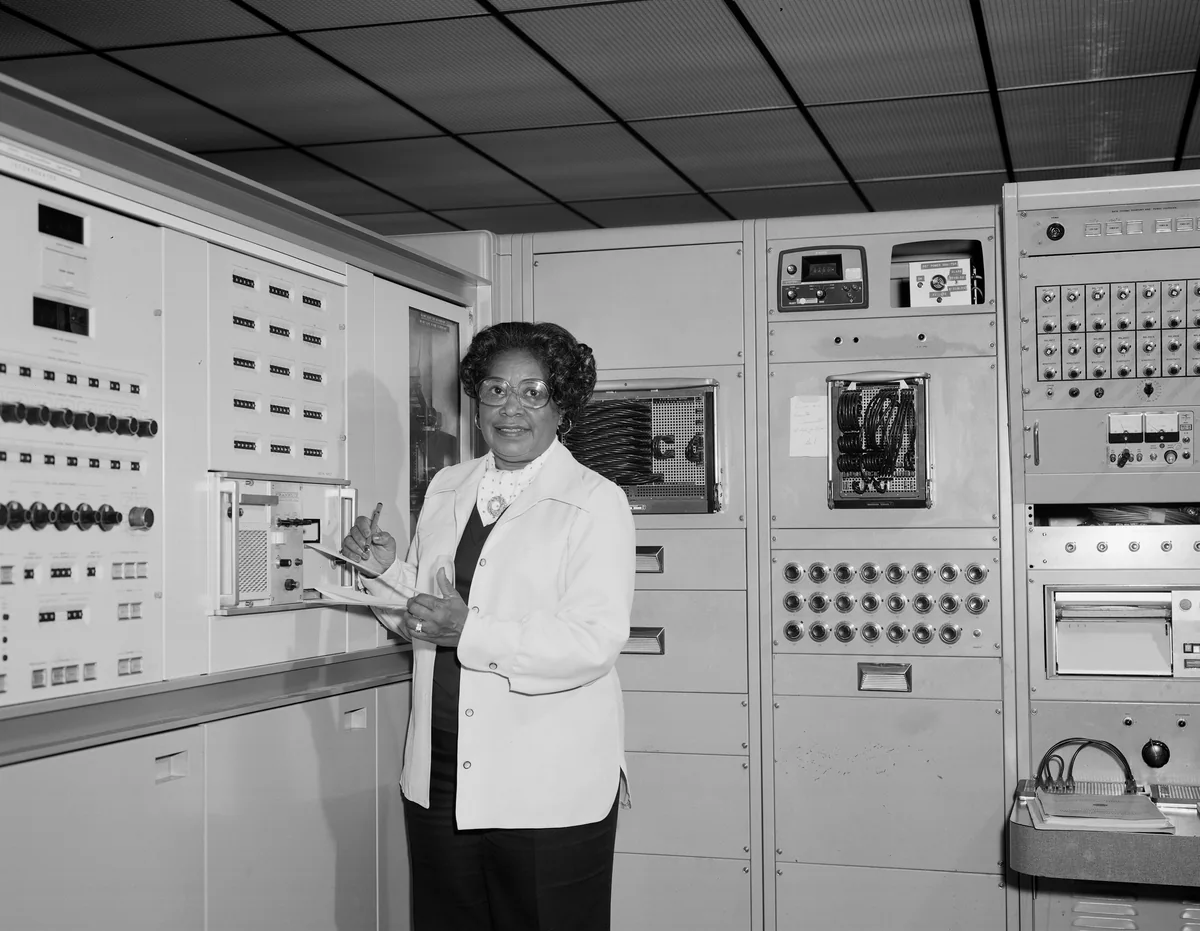
Why Mary W. Jackson matters
Jackson’s exhibit is about both engineering and access. Talent can exist before institutions are willing to recognize it; sometimes the technical history cannot be separated from the fight to enter the room where the work is happening. Jackson moved from mathematical computation into engineering and in 1958 became NASA’s first Black female engineer. Her work focused on aerodynamics, including wind-tunnel and flight-related research.
The life and career around the milestone
Mary W. Jackson was born April 9, 1921. The 1958 milestone belongs to the documented arc of the career rather than standing as an isolated date. The documented death or current-status entry is February 11, 2005; the life span is listed as 1921–2005. The clearest documented milestone is became nasa’s first black female engineer. Uncertain biographical details are left unstated rather than guessed.
What problem the work addressed
Her technical career mattered because aerospace programs depended on painstaking experimental work, not only astronauts and headline missions. Jackson also mattered institutionally because she crossed barriers that had kept Black women out of engineering roles. Jackson moved from mathematical computation into engineering and in 1958 became NASA’s first Black female engineer. Her work focused on aerodynamics, including wind-tunnel and flight-related research.
Inside the technology
Aerodynamics asks how air moves around bodies and how that flow creates lift, drag, heating and stability effects. Wind-tunnel testing turns those questions into measurable engineering data before aircraft or spacecraft face real flight conditions. The deeper engineering issue in Aerospace engineering is information flow: what is represented, how components exchange data, what happens when inputs are incomplete, and whether the system remains dependable as use expands. That lens is especially useful for reading Mary W. Jackson’s contribution because the visible product or milestone is only one layer; interfaces, data structures, protocols, models, or operating rules determine whether the technology can function beyond a demonstration.
The dated record
The timeline is anchored by 1958. Using the date as an anchor keeps the story testable: readers can separate what was already happening in the field from what followed the documented milestone. No separate company or launch year is stated unless it is supported by the historical evidence. A patent, experiment, or institutional contribution is evidence of technical work; it is not automatically evidence of mass production or commercial success.
From technical work to real-world use
This contribution emerged through institutional technical work rather than the lone-inventor model. Later in her career she moved into equal-opportunity work and helped support the advancement of other women and minority employees at NASA. That makes Mary W. Jackson a useful case for understanding how modern innovation actually happens: specialized expertise enters a larger program, and the value of the individual contribution appears in what the team or institution can do afterward.
The historical setting
The postwar decades expanded aviation, defense research, electronics, medicine, computing, and eventually the space program. Technical work increasingly happened inside large teams and institutions, making individual contribution easy to flatten into the name of a company or agency. Mary W. Jackson’s story is useful precisely because it restores a person and a specific technical capability to that larger systems history.
What changed because of the work
Her technical career mattered because aerospace programs depended on painstaking experimental work, not only astronauts and headline missions. Jackson also mattered institutionally because she crossed barriers that had kept Black women out of engineering roles. Later in her career she moved into equal-opportunity work and helped support the advancement of other women and minority employees at NASA. Taken together, those two pieces show why the milestone matters beyond biography. The first explains the constraint or opportunity; the second shows the change in capability, practice, infrastructure, or recognition that followed. That connection is what turns a dated achievement into technology history rather than a list of names.
What the record says—and what it does not
One of the most useful facts in the record is this: To take the engineering courses she needed, Jackson had to petition the City of Hampton for permission to attend classes held at a segregated white high school. Jackson. Jackson. When a celebrated ‘first’ claim is broader than the evidence safely supports, the narrower documented claim is the stronger history.
Why the technology still matters
The modern connection is direct in concept even when the tools have changed. Today’s systems still depend on reliable interfaces, good data, trustworthy automation, and architecture that can scale. Aerodynamics asks how air moves around bodies and how that flow creates lift, drag, heating and stability effects. Wind-tunnel testing turns those questions into measurable engineering data before aircraft or spacecraft face real flight conditions. The point is not that every modern product descends directly from Mary W. Jackson’s work; it is that the same class of engineering problem—how to make information systems dependable and usable—remains central.
A lesson for builders now
For builders, the most transferable lesson is to study the constraint before admiring the artifact. Mary W. Jackson’s documented milestone was to became NASA’s first Black female engineer. Her technical career mattered because aerospace programs depended on painstaking experimental work, not only astronauts and headline missions. Jackson also mattered institutionally because she crossed barriers that had kept Black women out of engineering roles. A strong product strategy starts the same way: identify the failure, bottleneck, or exclusion clearly enough that the design decision becomes obvious in hindsight.
The legacy in one clear line
The strongest way to remember Mary W. Jackson is specific: Became NASA’s first Black female engineer. Jackson’s exhibit is about both engineering and access. Talent can exist before institutions are willing to recognize it; sometimes the technical history cannot be separated from the fight to enter the room where the work is happening. The strongest legacy is the specific, documented contribution itself.