Marie Van Brittan Brown
Co-invented an early home video security system
The breakthrough, the technology behind it, the world around it, and the impact that followed.
Why Marie Van Brittan Brown matters
She did not start from 'what technology should I invent?' She started from 'what do I need to know and control before I open this door?' Brown and her husband Albert developed and patented a residential security system combining a movable camera, television monitor, two-way audio, remote door control and an alarm mechanism. The patent was granted in 1969.
The life and career around the milestone
Marie Van Brittan Brown was born October 22, 1922. The 1969 milestone belongs to the documented arc of the career rather than standing as an isolated date. The documented death or current-status entry is February 2, 1999; the life span is listed as 1922–1999. The clearest documented milestone is co-invented an early home video security system. Uncertain biographical details are left unstated rather than guessed.
What problem the work addressed
It anticipated features that are now ordinary in video doorbells, intercoms and smart-home security systems. The important insight was not merely surveillance—it was giving a person inside the home information and control before physical contact. Brown and her husband Albert developed and patented a residential security system combining a movable camera, television monitor, two-way audio, remote door control and an alarm mechanism. The patent was granted in 1969.
Inside the technology
The system combined several technologies into an integrated user experience: identify a visitor visually, talk without opening the door, unlock remotely when safe and trigger an alarm when necessary. Its novelty was in how those components were assembled around a household security problem. The practical engineering question in Home security + video systems is whether the idea survives repeated use. Materials, geometry, motion, timing, controls, and the person operating the device all have to work together. For Marie Van Brittan Brown, that means the milestone should be examined as a functioning system—not as a trivia fact. The contribution mattered because a physical task or risk was translated into a design that could be described, built, tested, or used.
The dated record
The timeline is anchored by 1969. Using the date as an anchor keeps the story testable: readers can separate what was already happening in the field from what followed the documented milestone. No separate company or launch year is stated unless it is supported by the historical evidence. A patent, experiment, or institutional contribution is evidence of technical work; it is not automatically evidence of mass production or commercial success.
From technical work to real-world use
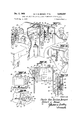
Patent evidence is especially useful in Marie Van Brittan Brown’s story because it fixes a technical claim to a date and, when drawings survive, shows how the inventor described the mechanism. The Browns’ patent became part of the technical lineage cited by later security inventions. The patent combined cameras, remote viewing, two-way communication and remote door control into a home system, anticipating the integrated logic now familiar in modern residential security products. A patent still has limits as historical evidence: it does not by itself establish production volume, sales, wealth, or exclusive authorship of every later version of the idea. It documents technical work without implying a broader business claim.
The historical setting
The postwar decades expanded aviation, defense research, electronics, medicine, computing, and eventually the space program. Technical work increasingly happened inside large teams and institutions, making individual contribution easy to flatten into the name of a company or agency. Marie Van Brittan Brown’s story is useful precisely because it restores a person and a specific technical capability to that larger systems history.
What changed because of the work
It anticipated features that are now ordinary in video doorbells, intercoms and smart-home security systems. The important insight was not merely surveillance—it was giving a person inside the home information and control before physical contact. The Browns’ patent became part of the technical lineage cited by later security inventions. The patent combined cameras, remote viewing, two-way communication and remote door control into a home system, anticipating the integrated logic now familiar in modern residential security products. Taken together, those two pieces show why the milestone matters beyond biography. The first explains the constraint or opportunity; the second shows the change in capability, practice, infrastructure, or recognition that followed. That connection is what turns a dated achievement into technology history rather than a list of names.
What the record says—and what it does not
One of the most useful facts in the record is this: Brown was a nurse who worked irregular hours and developed the concept in response to concerns about being home alone and slow police response in her Queens neighborhood. S. Patent — Brown home security system. When a celebrated ‘first’ claim is broader than the evidence safely supports, the narrower documented claim is the stronger history.
Why the technology still matters
The artifact may belong to another era, but the engineering pattern is current. The system combined several technologies into an integrated user experience: identify a visitor visually, talk without opening the door, unlock remotely when safe and trigger an alarm when necessary. Its novelty was in how those components were assembled around a household security problem. Modern products still win or fail on the same practical questions: does the design reduce friction, risk, time, cost, or error, and can other people use it reliably? Marie Van Brittan Brown’s exhibit is valuable because it lets readers see those design questions before today’s vocabulary existed.
A lesson for builders now
For builders, the most transferable lesson is to study the constraint before admiring the artifact. Marie Van Brittan Brown’s documented milestone was to co-invented an early home video security system. It anticipated features that are now ordinary in video doorbells, intercoms and smart-home security systems. The important insight was not merely surveillance—it was giving a person inside the home information and control before physical contact. A strong product strategy starts the same way: identify the failure, bottleneck, or exclusion clearly enough that the design decision becomes obvious in hindsight.
The legacy in one clear line
The strongest way to remember Marie Van Brittan Brown is specific: Co-invented an early home video security system. She did not start from 'what technology should I invent?' She started from 'what do I need to know and control before I open this door?' The strongest legacy is the specific, documented contribution itself.