John Albert Burr
Patented an improved rotary lawn mower
The breakthrough, the technology behind it, the world around it, and the impact that followed.
Why John Albert Burr matters
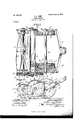
Burr’s exhibit teaches a useful innovation lesson: “improvement” is not a lesser category of invention. Most mature technologies become useful through generations of engineers fixing edge cases, maintenance problems, control issues and human frustrations. John Albert Burr received U.S. Patent No. 624,749 in 1899 for improvements to a lawn mower. His design focused on traction, rotary cutting and reducing problems with grass clogging while making it easier to mow close to walls and edges.
The life and career around the milestone
John Albert Burr was born 1848. The 1899 milestone belongs to the documented arc of the career rather than standing as an isolated date. The documented death or current-status entry is 1926; the life span is listed as 1848–1926. The clearest documented milestone is patented an improved rotary lawn mower. Uncertain biographical details are left unstated rather than guessed.
What problem the work addressed
The value of a machine often lies in usability after the first invention. A mower that clogs less, tracks better and reaches edges more effectively reduces rework and makes a repetitive maintenance job easier to complete. John Albert Burr received U.S. Patent No. 624,749 in 1899 for improvements to a lawn mower. His design focused on traction, rotary cutting and reducing problems with grass clogging while making it easier to mow close to walls and edges.
Inside the technology
A mower must coordinate wheel traction, blade motion, cutting clearance and the movement of clippings through the machine. Burr’s patent addressed the geometry and mechanics of those interactions rather than inventing the lawn mower category itself, which had existed for decades. The practical engineering question in Landscape machinery is whether the idea survives repeated use. Materials, geometry, motion, timing, controls, and the person operating the device all have to work together. For John Albert Burr, that means the milestone should be examined as a functioning system—not as a trivia fact. The contribution mattered because a physical task or risk was translated into a design that could be described, built, tested, or used.
The dated record
The timeline is anchored by 1899. Using the date as an anchor keeps the story testable: readers can separate what was already happening in the field from what followed the documented milestone. No separate company or launch year is stated unless it is supported by the historical evidence. A patent, experiment, or institutional contribution is evidence of technical work; it is not automatically evidence of mass production or commercial success.
From technical work to real-world use
Patent evidence is especially useful in John Albert Burr’s story because it fixes a technical claim to a date and, when drawings survive, shows how the inventor described the mechanism. Burr’s patent is part of the long evolution from early reel and rotary mowing machines toward more practical lawn-care equipment. His documented improvement illustrates how incremental engineering can shape familiar tools over generations. A patent still has limits as historical evidence: it does not by itself establish production volume, sales, wealth, or exclusive authorship of every later version of the idea. It documents technical work without implying a broader business claim.
The historical setting
The late nineteenth century was a period of mechanization, railroad growth, urbanization, and expanding patent activity. New devices could solve real industrial problems, yet invention alone did not guarantee capital, manufacturing, distribution, or public credit. John Albert Burr’s milestone belongs inside that wider industrial transition. The technical claim stands on its own without assuming how widely the idea was manufactured or how much money it produced.
What changed because of the work
The value of a machine often lies in usability after the first invention. A mower that clogs less, tracks better and reaches edges more effectively reduces rework and makes a repetitive maintenance job easier to complete. Burr’s patent is part of the long evolution from early reel and rotary mowing machines toward more practical lawn-care equipment. His documented improvement illustrates how incremental engineering can shape familiar tools over generations. Taken together, those two pieces show why the milestone matters beyond biography. The first explains the constraint or opportunity; the second shows the change in capability, practice, infrastructure, or recognition that followed. That connection is what turns a dated achievement into technology history rather than a list of names.
What the record says—and what it does not
One of the most useful facts in the record is this: Burr did not invent the first lawn mower; Edwin Budding’s mower dates to 1830. The historically defensible claim is that Burr patented meaningful improvements to rotary mowing machinery in 1899. S. Patent 624,749 — John Albert Burr lawn mower and African American Registry — John A. Burr. When a celebrated ‘first’ claim is broader than the evidence safely supports, the narrower documented claim is the stronger history.
Why the technology still matters
The artifact may belong to another era, but the engineering pattern is current. A mower must coordinate wheel traction, blade motion, cutting clearance and the movement of clippings through the machine. Burr’s patent addressed the geometry and mechanics of those interactions rather than inventing the lawn mower category itself, which had existed for decades. Modern products still win or fail on the same practical questions: does the design reduce friction, risk, time, cost, or error, and can other people use it reliably? John Albert Burr’s exhibit is valuable because it lets readers see those design questions before today’s vocabulary existed.
A lesson for builders now
A founder looking at John Albert Burr should separate invention from adoption. The milestone—Patented an improved rotary lawn mower—created technical possibility. The impact section shows what happened when that possibility entered use. Modern builders still have to bridge the same gap with manufacturing, distribution, standards, integrations, trust, or customer education.
The legacy in one clear line
The strongest way to remember John Albert Burr is specific: Patented an improved rotary lawn mower. Burr’s exhibit teaches a useful innovation lesson: “improvement” is not a lesser category of invention. Most mature technologies become useful through generations of engineers fixing edge cases, maintenance problems, control issues and human frustrations. The strongest legacy is the specific, documented contribution itself.