Henry Lee
Patented an animal trap shortly after the Civil War
The breakthrough, the technology behind it, the world around it, and the impact that followed.
Why Henry Lee matters
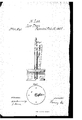
Henry Lee appears on Henry Baker’s documented list of Black inventors for an animal-trap patent issued in 1867. The surviving patent number provides a concrete post-Civil War technical milestone even though little biographical material survives.
The life and career around the milestone
A precise birth date for Henry Lee is not firmly established in the available historical record. The 1867 milestone belongs to the documented arc of the career rather than standing as an isolated date. The life span is listed as Not publicly verified. The clearest documented milestone is patented an animal trap shortly after the civil war. Uncertain biographical details are left unstated rather than guessed.
What problem the work addressed
Henry Lee appears on Henry Baker’s documented list of Black inventors for an animal-trap patent issued in 1867. The surviving patent number provides a concrete post-Civil War technical milestone even though little biographical material survives.
Inside the technology
Mechanical traps rely on triggers, stored energy and controlled movement. The patent record reflects the practical mechanical design culture of the period. The practical engineering question in Mechanical trapping technology is whether the idea survives repeated use. Materials, geometry, motion, timing, controls, and the person operating the device all have to work together. For Henry Lee, that means the milestone should be examined as a functioning system—not as a trivia fact. The contribution mattered because a physical task or risk was translated into a design that could be described, built, tested, or used.
The dated record
The timeline is anchored by February 12, 1867 · U.S. Patent No. 61,941. Those dates matter because the contribution developed across more than one documented step rather than appearing as a single frozen moment. No separate company or launch year is stated unless it is supported by the historical evidence. A patent, experiment, or institutional contribution is evidence of technical work; it is not automatically evidence of mass production or commercial success.
From technical work to real-world use
Patent evidence is especially useful in Henry Lee’s story because it fixes a technical claim to a date and, when drawings survive, shows how the inventor described the mechanism. The surviving patent record documents participation in American invention even where later historical storytelling failed to preserve the person’s full life. A patent still has limits as historical evidence: it does not by itself establish production volume, sales, wealth, or exclusive authorship of every later version of the idea. It documents technical work without implying a broader business claim.
The historical setting
The late nineteenth century was a period of mechanization, railroad growth, urbanization, and expanding patent activity. New devices could solve real industrial problems, yet invention alone did not guarantee capital, manufacturing, distribution, or public credit. Henry Lee’s milestone belongs inside that wider industrial transition. The technical claim stands on its own without assuming how widely the idea was manufactured or how much money it produced.
What changed because of the work
The surviving patent record documents participation in American invention even where later historical storytelling failed to preserve the person’s full life. Taken together, those two pieces show why the milestone matters beyond biography. The first explains the constraint or opportunity; the second shows the change in capability, practice, infrastructure, or recognition that followed. That connection is what turns a dated achievement into technology history rather than a list of names.
What the record says—and what it does not
One of the most useful facts in the record is this: The USPTO’s reconstruction of Baker’s list includes Lee’s 1867 patent. When a celebrated ‘first’ claim is broader than the evidence safely supports, the narrower documented claim is the stronger history.
Why the technology still matters
The artifact may belong to another era, but the engineering pattern is current. Mechanical traps rely on triggers, stored energy and controlled movement. The patent record reflects the practical mechanical design culture of the period. Modern products still win or fail on the same practical questions: does the design reduce friction, risk, time, cost, or error, and can other people use it reliably? Henry Lee’s exhibit is valuable because it lets readers see those design questions before today’s vocabulary existed.
A lesson for builders now
The business lesson is not to imitate the historical product. It is to imitate the discipline behind the problem selection. Henry Lee’s work shows why a recurring operational pain, safety risk, infrastructure gap, or access problem can be more valuable than an idea that merely sounds futuristic.
The legacy in one clear line
The strongest way to remember Henry Lee is specific: Patented an animal trap shortly after the Civil War. The strongest legacy is the specific, documented contribution itself.
The contribution in context
Henry Lee appears on Henry Baker’s documented list of Black inventors for an animal-trap patent issued in 1867. The surviving patent number provides a concrete post-Civil War technical milestone even though little biographical material survives. Mechanical traps rely on triggers, stored energy and controlled movement. The patent record reflects the practical mechanical design culture of the period.
Lee’s sparse biography is itself historically important: many Black patentees left technical records without the biographies, portraits and business archives preserved for better-known white inventors. The surviving patent record documents participation in American invention even where later historical storytelling failed to preserve the person’s full life.