Henry Blair
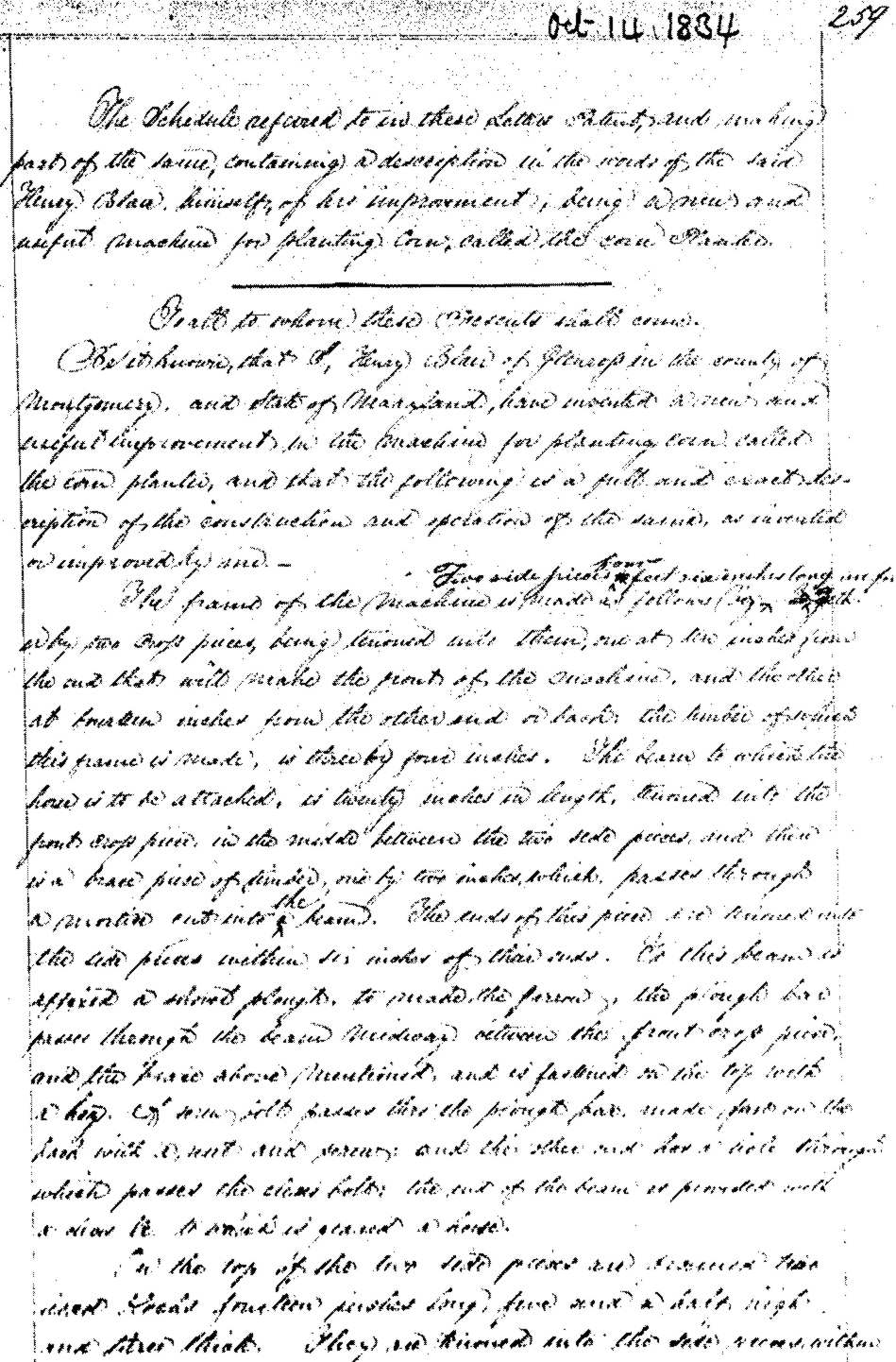
Patented a mechanical corn seed planter
The breakthrough, the technology behind it, the world around it, and the impact that followed.
Why Henry Blair matters
Blair’s exhibit helps visitors see that automation did not begin with software. Long before robots and AI, inventors were asking the same core question: which repeated human motions can be converted into a reliable machine process? Blair received a U.S. patent in 1834 for a mechanical corn planter and another in 1836 for a cotton planter. The machines were designed to reduce the labor involved in placing seed and preparing rows.
The life and career around the milestone
Henry Blair was born c. 1807. The 1834 milestone belongs to the documented arc of the career rather than standing as an isolated date. The documented death or current-status entry is 1860; the life span is listed as c. 1807–1860. The clearest documented milestone is patented a mechanical corn seed planter. Uncertain biographical details are left unstated rather than guessed.
What problem the work addressed
Blair’s work matters because agriculture was one of the most labor-intensive parts of the American economy. Mechanizing repetitive planting tasks could change how much land a farmer could work and how consistently seed could be placed. Blair received a U.S. patent in 1834 for a mechanical corn planter and another in 1836 for a cotton planter. The machines were designed to reduce the labor involved in placing seed and preparing rows.
Inside the technology
His planters combined ground-opening components, seed delivery and covering actions into horse-drawn mechanisms. The engineering goal was familiar to modern automation: combine repeated manual steps into a coordinated system that increases throughput. Agricultural and food technology is unforgiving of fragile ideas. Irregular materials, moisture, dirt, continuous use, and the need to save labor expose weak mechanisms quickly. Seen that way, Henry Blair’s work in Agricultural machinery is about process control: turning a repeated physical task into something faster, more consistent, safer, or easier to operate.
The dated record
The timeline is anchored by 1834. Using the date as an anchor keeps the story testable: readers can separate what was already happening in the field from what followed the documented milestone. No separate company or launch year is stated unless it is supported by the historical evidence. A patent, experiment, or institutional contribution is evidence of technical work; it is not automatically evidence of mass production or commercial success.
From technical work to real-world use
Patent evidence is especially useful in Henry Blair’s story because it fixes a technical claim to a date and, when drawings survive, shows how the inventor described the mechanism. His patent record also carries unusual historical weight: early federal records explicitly identified him as 'a colored man,' making his case important to historians studying race, patents and technology in the antebellum United States. A patent still has limits as historical evidence: it does not by itself establish production volume, sales, wealth, or exclusive authorship of every later version of the idea. It documents technical work without implying a broader business claim.
The historical setting
The 1834s sit before the end of the Civil War, in a United States structured by slavery and severe restrictions on Black legal, educational, and economic opportunity. That broad setting does not prove a specific undocumented hardship in Henry Blair’s personal life, but it explains why surviving technical records from Black practitioners are unusually important. Almanacs, patents, advertisements, government files, and later institutional biographies often carry more weight than a conventional archive would for a better-documented inventor.
What changed because of the work
Blair’s work matters because agriculture was one of the most labor-intensive parts of the American economy. Mechanizing repetitive planting tasks could change how much land a farmer could work and how consistently seed could be placed. His patent record also carries unusual historical weight: early federal records explicitly identified him as 'a colored man,' making his case important to historians studying race, patents and technology in the antebellum United States. Taken together, those two pieces show why the milestone matters beyond biography. The first explains the constraint or opportunity; the second shows the change in capability, practice, infrastructure, or recognition that followed. That connection is what turns a dated achievement into technology history rather than a list of names.
What the record says—and what it does not
One of the most useful facts in the record is this: Blair is often described as the second Black American to receive a U.S. patent after Thomas Jennings. His two agricultural patents are especially important because the surviving record documents a Black farmer engineering around the labor demands of planting in the 1830s. When a celebrated ‘first’ claim is broader than the evidence safely supports, the narrower documented claim is the stronger history.
Why the technology still matters
The artifact may belong to another era, but the engineering pattern is current. His planters combined ground-opening components, seed delivery and covering actions into horse-drawn mechanisms. The engineering goal was familiar to modern automation: combine repeated manual steps into a coordinated system that increases throughput. Modern products still win or fail on the same practical questions: does the design reduce friction, risk, time, cost, or error, and can other people use it reliably? Henry Blair’s exhibit is valuable because it lets readers see those design questions before today’s vocabulary existed.
A lesson for builders now
A founder looking at Henry Blair should separate invention from adoption. The milestone—Patented a mechanical corn seed planter—created technical possibility. The impact section shows what happened when that possibility entered use. Modern builders still have to bridge the same gap with manufacturing, distribution, standards, integrations, trust, or customer education.
The legacy in one clear line
The strongest way to remember Henry Blair is specific: Patented a mechanical corn seed planter. Blair’s exhibit helps visitors see that automation did not begin with software. Long before robots and AI, inventors were asking the same core question: which repeated human motions can be converted into a reliable machine process? The strongest legacy is the specific, documented contribution itself.