Granville T. Woods
Patented railway communications systems
The breakthrough, the technology behind it, the world around it, and the impact that followed.
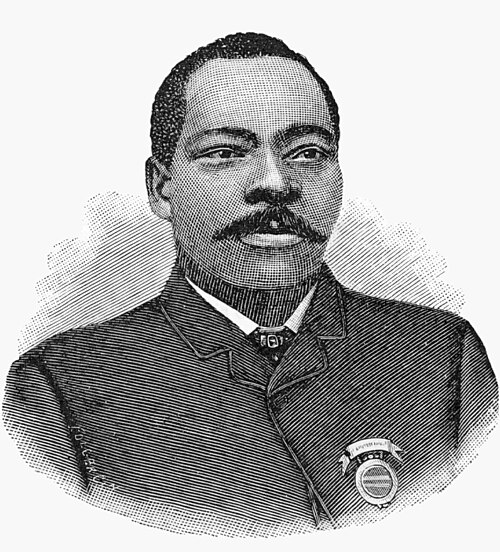
Why Granville T. Woods matters
Woods represents a crucial historical theme: Black inventors were not only making isolated devices—they were working on networks. Transportation, electricity and communication were converging long before the internet made 'network effects' a business cliché. Woods developed numerous electrical and railway inventions, including systems that improved communication between moving trains and stations. His 1887 work on telegraphy and later railway technologies earned him the nickname 'Black Edison' in historical accounts.
The life and career around the milestone
Granville T. Woods was born April 23, c. 1856 · records vary. The 1887 milestone belongs to the documented arc of the career rather than standing as an isolated date. The documented death or current-status entry is January 30, 1910; the life span is listed as c. 1850s–1910. The clearest documented milestone is patented railway communications systems. Uncertain biographical details are left unstated rather than guessed.
What problem the work addressed
His inventions mattered because railroads were becoming a national infrastructure system. Better signaling and communication could reduce collisions, improve coordination and increase the amount of traffic a network could safely handle. Woods developed numerous electrical and railway inventions, including systems that improved communication between moving trains and stations. His 1887 work on telegraphy and later railway technologies earned him the nickname 'Black Edison' in historical accounts.
Inside the technology
Railway communication problems are safety problems. A moving train needs timely information about other trains, track conditions and dispatch instructions. Woods worked on electrical systems that used rails, conductors and communication circuits to move information alongside transportation. Work in Electrical + railway communications is constrained by reach, signal quality, compatibility, capacity, and reliability. A communications system is valuable only when information can move between endpoints under real conditions, not merely in a controlled test. For Granville T. Woods, that makes the architecture around the breakthrough as important as the individual component: the contribution sits inside a network whose usefulness grows when more people, devices, or institutions can connect through it.
The dated record
The timeline is anchored by 1887. Using the date as an anchor keeps the story testable: readers can separate what was already happening in the field from what followed the documented milestone. No separate company or launch year is stated unless it is supported by the historical evidence. A patent, experiment, or institutional contribution is evidence of technical work; it is not automatically evidence of mass production or commercial success.
From technical work to real-world use
Patent evidence is especially useful in Granville T. Woods’s story because it fixes a technical claim to a date and, when drawings survive, shows how the inventor described the mechanism. Woods accumulated dozens of patents across railway electrification, telegraphy, telephony and power systems, and defended his intellectual property in disputes with larger companies. A patent still has limits as historical evidence: it does not by itself establish production volume, sales, wealth, or exclusive authorship of every later version of the idea. It documents technical work without implying a broader business claim.
The historical setting
The late nineteenth century was a period of mechanization, railroad growth, urbanization, and expanding patent activity. New devices could solve real industrial problems, yet invention alone did not guarantee capital, manufacturing, distribution, or public credit. Granville T. Woods’s milestone belongs inside that wider industrial transition. The technical claim stands on its own without assuming how widely the idea was manufactured or how much money it produced.
What changed because of the work
His inventions mattered because railroads were becoming a national infrastructure system. Better signaling and communication could reduce collisions, improve coordination and increase the amount of traffic a network could safely handle. Woods accumulated dozens of patents across railway electrification, telegraphy, telephony and power systems, and defended his intellectual property in disputes with larger companies. Taken together, those two pieces show why the milestone matters beyond biography. The first explains the constraint or opportunity; the second shows the change in capability, practice, infrastructure, or recognition that followed. That connection is what turns a dated achievement into technology history rather than a list of names.
What the record says—and what it does not
One of the most useful facts in the record is this: Thomas Edison challenged Woods over patent rights in at least one area; Woods prevailed in court and later declined an offer to work for Edison. Woods. When a celebrated ‘first’ claim is broader than the evidence safely supports, the narrower documented claim is the stronger history.
Why the technology still matters
The modern connection is direct in concept even when the tools have changed. Today’s systems still depend on reliable interfaces, good data, trustworthy automation, and architecture that can scale. Railway communication problems are safety problems. A moving train needs timely information about other trains, track conditions and dispatch instructions. Woods worked on electrical systems that used rails, conductors and communication circuits to move information alongside transportation. The point is not that every modern product descends directly from Granville T. Woods’s work; it is that the same class of engineering problem—how to make information systems dependable and usable—remains central.
A lesson for builders now
A founder looking at Granville T. Woods should separate invention from adoption. The milestone—Patented railway communications systems—created technical possibility. The impact section shows what happened when that possibility entered use. Modern builders still have to bridge the same gap with manufacturing, distribution, standards, integrations, trust, or customer education.
The legacy in one clear line
The strongest way to remember Granville T. Woods is specific: Patented railway communications systems. Woods represents a crucial historical theme: Black inventors were not only making isolated devices—they were working on networks. Transportation, electricity and communication were converging long before the internet made 'network effects' a business cliché. The strongest legacy is the specific, documented contribution itself.