Garrett Morgan
Patented a safety hood and later a three-position traffic signal
The breakthrough, the technology behind it, the world around it, and the impact that followed.
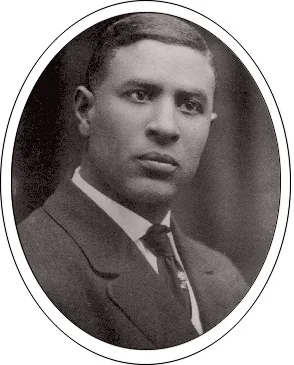
Why Garrett Morgan matters
Morgan’s story matters in this history as both invention history and product ethics. He repeatedly looked at systems where ordinary people could die because the infrastructure was not designed carefully enough—and then built a safer alternative. Morgan developed a breathing/safety hood that helped protect users in smoke-filled or toxic environments and later patented a traffic signal with an intermediate all-stop position. Both inventions came from observing real safety failures.
The life and career around the milestone
Garrett Morgan was born March 4, 1877. The 1914 milestone belongs to the documented arc of the career rather than standing as an isolated date. The documented death or current-status entry is July 27, 1963; the life span is listed as 1877–1963. The clearest documented milestone is patented a safety hood and later a three-position traffic signal. Uncertain biographical details are left unstated rather than guessed.
What problem the work addressed
His technology mattered because industrial cities were becoming more complex. Tunnels, factories, automobiles and crowded intersections created new risks faster than safety systems were developing. Morgan developed a breathing/safety hood that helped protect users in smoke-filled or toxic environments and later patented a traffic signal with an intermediate all-stop position. Both inventions came from observing real safety failures.
Inside the technology
The safety hood used a long intake tube reaching toward cleaner air near the ground, while the traffic signal introduced a phase intended to clear an intersection before cross traffic moved. Different products, same engineering instinct: create time and separation between people and danger. Work in Safety engineering + traffic systems is constrained by reach, signal quality, compatibility, capacity, and reliability. A communications system is valuable only when information can move between endpoints under real conditions, not merely in a controlled test. For Garrett Morgan, that makes the architecture around the breakthrough as important as the individual component: the contribution sits inside a network whose usefulness grows when more people, devices, or institutions can connect through it.
The dated record
The timeline is anchored by 1914. Using the date as an anchor keeps the story testable: readers can separate what was already happening in the field from what followed the documented milestone. No separate company or launch year is stated unless it is supported by the historical evidence. A patent, experiment, or institutional contribution is evidence of technical work; it is not automatically evidence of mass production or commercial success.
From technical work to real-world use
Patent evidence is especially useful in Garrett Morgan’s story because it fixes a technical claim to a date and, when drawings survive, shows how the inventor described the mechanism. Morgan personally used his safety hood during the 1916 Cleveland tunnel disaster. His traffic-signal patent was granted in 1923 and became part of the evolution toward modern intersection control. A patent still has limits as historical evidence: it does not by itself establish production volume, sales, wealth, or exclusive authorship of every later version of the idea. It documents technical work without implying a broader business claim.
The historical setting
By the early twentieth century, automobiles, utilities, factories, mass production, and professional engineering were remaking daily life. Jim Crow segregation and discriminatory hiring shaped the American economy at the same time.
What changed because of the work
His technology mattered because industrial cities were becoming more complex. Tunnels, factories, automobiles and crowded intersections created new risks faster than safety systems were developing. Morgan personally used his safety hood during the 1916 Cleveland tunnel disaster. His traffic-signal patent was granted in 1923 and became part of the evolution toward modern intersection control. Taken together, those two pieces show why the milestone matters beyond biography. The first explains the constraint or opportunity; the second shows the change in capability, practice, infrastructure, or recognition that followed. That connection is what turns a dated achievement into technology history rather than a list of names.
What the record says—and what it does not
One of the most useful facts in the record is this: USPTO records emphasize the racism Morgan faced even after risking his life in the tunnel rescue; some customers reportedly canceled safety-hood orders after learning the inventor was Black. When a celebrated ‘first’ claim is broader than the evidence safely supports, the narrower documented claim is the stronger history.
Why the technology still matters
The modern connection is direct in concept even when the tools have changed. Today’s systems still depend on reliable interfaces, good data, trustworthy automation, and architecture that can scale. The safety hood used a long intake tube reaching toward cleaner air near the ground, while the traffic signal introduced a phase intended to clear an intersection before cross traffic moved. Different products, same engineering instinct: create time and separation between people and danger. The point is not that every modern product descends directly from Garrett Morgan’s work; it is that the same class of engineering problem—how to make information systems dependable and usable—remains central.
A lesson for builders now
The strategic lesson is specificity. Saying that Garrett Morgan was ‘innovative’ teaches almost nothing. Saying patented a safety hood and later a three-position traffic signal identifies an action, a problem, and a technical direction. That is the useful level of detail for builders: understand exactly what changed, why the previous approach was inadequate, and what had to be true for the new approach to work.
The legacy in one clear line
The strongest way to remember Garrett Morgan is specific: Patented a safety hood and later a three-position traffic signal. Morgan’s story matters in this history as both invention history and product ethics. He repeatedly looked at systems where ordinary people could die because the infrastructure was not designed carefully enough—and then built a safer alternative. The strongest legacy is the specific, documented contribution itself.