Benjamin Banneker
Built a wooden striking clock
The breakthrough, the technology behind it, the world around it, and the impact that followed.
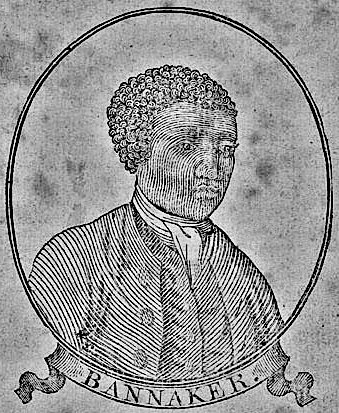
Why Benjamin Banneker matters
Banneker’s story makes the point immediately: Black technological history does not begin with Silicon Valley, the personal computer or even the industrial age. It reaches back into the colonial period and into the hands of people whose technical work was often treated as an exception rather than part of the main story. At about 22, Banneker studied a pocket watch, worked out its mechanism, enlarged the components and carved a functioning clock largely from wood. The clock became an early, well-documented demonstration of his mechanical reasoning and precision.
The life and career around the milestone
Benjamin Banneker was born November 9, 1731. The 1753 milestone belongs to the documented arc of the career rather than standing as an isolated date. The documented death or current-status entry is October 19, 1806; the life span is listed as 1731–1806. The clearest documented milestone is built a wooden striking clock. Uncertain biographical details are left unstated rather than guessed.
What problem the work addressed
Banneker’s clock is important not because it was magical or because exaggerated 'first ever' claims are needed, but because it gives us a verifiable 1753 point at which a Black American was practicing sophisticated mechanical problem-solving. His later astronomy and almanac work show the same pattern: observation, calculation and practical application. At about 22, Banneker studied a pocket watch, worked out its mechanism, enlarged the components and carved a functioning clock largely from wood. The clock became an early, well-documented demonstration of his mechanical reasoning and precision.
Inside the technology
A mechanical clock coordinates stored energy, gears, escapement and timekeeping so motion is released at a controlled rate. Banneker’s achievement mattered because he reverse-engineered a compact imported mechanism and recreated its logic at a much larger scale with hand-made components. The practical engineering question in Mechanical engineering + astronomy is whether the idea survives repeated use. Materials, geometry, motion, timing, controls, and the person operating the device all have to work together. For Benjamin Banneker, that means the milestone should be examined as a functioning system—not as a trivia fact. The contribution mattered because a physical task or risk was translated into a design that could be described, built, tested, or used.
The dated record
The timeline is anchored by 1753. Using the date as an anchor keeps the story testable: readers can separate what was already happening in the field from what followed the documented milestone. No separate company or launch year is stated unless it is supported by the historical evidence. A patent, experiment, or institutional contribution is evidence of technical work; it is not automatically evidence of mass production or commercial success.
From technical work to real-world use
The path from idea to use is visible through the documented impact: His reputation expanded beyond clockmaking into surveying, astronomy and published almanacs. He participated in the 1791 survey work connected to the new federal district and became one of the best-known Black scientific figures of the early United States. The evidence does not establish a broader commercial story, so none is implied. Instead, it asks the narrower engineering question: did the work create a usable mechanism, process, method, system, or body of knowledge that changed what other people could do? That is the standard applied here.
The historical setting
The 1753s sit before the end of the Civil War, in a United States structured by slavery and severe restrictions on Black legal, educational, and economic opportunity. That broad setting does not prove a specific undocumented hardship in Benjamin Banneker’s personal life, but it explains why surviving technical records from Black practitioners are unusually important. Almanacs, patents, advertisements, government files, and later institutional biographies often carry more weight than a conventional archive would for a better-documented inventor.
What changed because of the work
Banneker’s clock is important not because it was magical or because exaggerated 'first ever' claims are needed, but because it gives us a verifiable 1753 point at which a Black American was practicing sophisticated mechanical problem-solving. His later astronomy and almanac work show the same pattern: observation, calculation and practical application. His reputation expanded beyond clockmaking into surveying, astronomy and published almanacs. He participated in the 1791 survey work connected to the new federal district and became one of the best-known Black scientific figures of the early United States. Taken together, those two pieces show why the milestone matters beyond biography. The first explains the constraint or opportunity; the second shows the change in capability, practice, infrastructure, or recognition that followed. That connection is what turns a dated achievement into technology history rather than a list of names.
What the record says—and what it does not
One of the most useful facts in the record is this: Some later retellings overstate Banneker’s clock as the first clock made in America. That broader claim is not supported; the National Park Service describes it as one of the first clocks in the United States. When a celebrated ‘first’ claim is broader than the evidence safely supports, the narrower documented claim is the stronger history.
Why the technology still matters
The artifact may belong to another era, but the engineering pattern is current. A mechanical clock coordinates stored energy, gears, escapement and timekeeping so motion is released at a controlled rate. Banneker’s achievement mattered because he reverse-engineered a compact imported mechanism and recreated its logic at a much larger scale with hand-made components. Modern products still win or fail on the same practical questions: does the design reduce friction, risk, time, cost, or error, and can other people use it reliably? Benjamin Banneker’s exhibit is valuable because it lets readers see those design questions before today’s vocabulary existed.
A lesson for builders now
A founder looking at Benjamin Banneker should separate invention from adoption. The milestone—Built a wooden striking clock—created technical possibility. The impact section shows what happened when that possibility entered use. Modern builders still have to bridge the same gap with manufacturing, distribution, standards, integrations, trust, or customer education.
The legacy in one clear line
The strongest way to remember Benjamin Banneker is specific: Built a wooden striking clock. Banneker’s story makes the point immediately: Black technological history does not begin with Silicon Valley, the personal computer or even the industrial age. It reaches back into the colonial period and into the hands of people whose technical work was often treated as an exception rather than part of the main story. The strongest legacy is the specific, documented contribution itself.